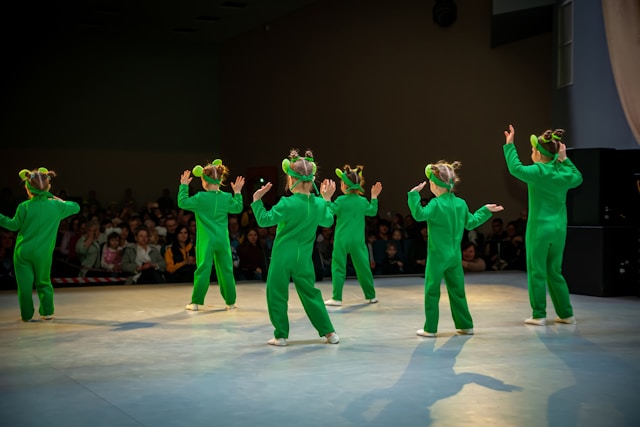
There is a particular kind of quiet that settles into a room when a child is scanning for you. It happens in auditoriums and school halls, on sports courts and in crowded cafeterias, in living rooms where a birthday song is about to begin. For a few seconds, the child’s attention is not on the stage or the cake or the scoreboard. It is on the crowd. They are searching for the familiar outline of your shoulders, the face that calms them, the small nod that says, I am here, I see you, this matters. When that presence is missing, the moment still goes on. The song is still sung. The award is still handed over. The child still walks across a stage, still takes the shot, still blows out the candles. Yet something shifts. The event becomes more than what happened. It becomes a message the child receives about how love shows up, and whether it arrives when it counts.
Adults tend to treat important events like peaks on a calendar. They are the big punctuation marks in a year of routines and logistics. But a parent–child bond is rarely built on peaks alone. Bonds are built through repetition, through the ordinary reliability of being met. A child may not remember every Tuesday dinner, but they often remember who showed up for the “once in a lifetime” moments, or the ones that felt like that at the time. A recital, a graduation, a championship match, a school showcase, a hospital visit, a parent–teacher meeting, even a first day in a new environment can become a small turning point. These are the moments when children step slightly outside the home system and ask the wider world to reflect them back. They are trying on a version of themselves and hoping it is seen. In that way, important events are not only celebrations. They are proof points. They test a child’s developing sense of belonging. They ask, sometimes without words, whether it is safe to be visible, whether effort is worth it, whether pride has a place to land. A parent’s presence in those moments does something quietly structural. It anchors the child’s nervous system while the child is exposed to the gaze of others. It says, you can be in the world and still belong to us. You can take a risk and still be held. You can feel nervous and still not be alone.
Absence does not automatically break that anchor. Families are complicated, and life does not always cooperate with love. But absence can loosen the anchor when the child does not have enough context, language, or emotional safety to interpret what happened. Children are relentless meaning makers. If adults do not help them make sense of a missed moment, they will still make sense of it anyway, and the story they create often starts with identity and priority rather than logistics. A parent may interpret absence as a scheduling collision. Work ran late. A flight was delayed. Traffic was impossible. A client crisis erupted. A younger sibling had a fever. A caregiver fell through. A health issue flared. A custody schedule did not allow it. The reasons can be real, painful, and unavoidable. Yet a child, especially a younger child, often interprets absence as a statement about value. Did I matter enough? Was I important? Did something else win? Am I the kind of person people show up for?
Sometimes this interpretation is not spoken aloud. It becomes a private conclusion the child carries quietly, often because children are protective of their attachment. They do not want to risk losing more. They may shrug and say it is fine, but their body remembers the drop in the stomach when they looked out and did not find you. They may start to “pre-grieve” your absence before it happens. They stop asking if you are coming because asking creates hope, and hope makes disappointment sharper. They may insist an event does not matter, not because it truly does not, but because downplaying it feels safer than wanting. When this happens once in an otherwise steady relationship, many children can integrate it as a disappointment that hurts but does not define the bond. The foundation holds because there is enough everyday evidence that the relationship is reliable. A single missed recital can sit inside a bigger story that still says, my parent cares, my parent returns, my parent notices me. The ache is real, but it is not lonely.
What changes a bond more dramatically is a pattern. If absence becomes frequent, unpredictable, or casually dismissed, a child’s nervous system adapts. They stop expecting steadiness because expecting becomes a repeated injury. Some children become hyper independent, the ones who never need help, the ones who self manage and self soothe and self praise. This can look like maturity, but it is often an early form of emotional self protection. Other children push back, act out, become defiant, or test boundaries. That behavior is sometimes misread as attitude when it is actually a question. If I am difficult, will you still stay? If I am disappointed, will you listen? If I am not impressive, will you show up anyway?
Presence is not only physical attendance. Children can sense when you are present in body but absent in attention. A parent who sits through an event while scrolling, distracted, impatient, or treating the moment like an obligation can create a similar wound. The child learns that their visibility does not earn real engagement. In some cases, that can feel more confusing than a clear absence, because the parent is technically there, yet the child still feels alone. The bond is shaped not only by where your body is, but by where your mind and heart land. Over time, missed events can become recurring scenes in the child’s internal scrapbook. The empty seat. The photo where one space looks oddly unclaimed. The moment the child looked into the crowd and learned what it feels like to be proud and disappointed at the same time. These memories do not always stay as memories. They can turn into beliefs. Beliefs about trust, about reliability, about how relationships work. Some children become vigilant for abandonment. Others stop seeking comfort altogether, deciding that needing people is risky.
There is also a quieter effect on a child’s relationship with achievement. When a child learns that recognition is inconsistent, they may chase approval through performance. They become the high achiever who is always trying to earn attention that feels scarce. Or they may detach from effort, concluding that trying is pointless if nobody sees it. Neither response is about laziness or ambition. It is about the child trying to protect their heart. It is worth naming the uncomfortable truth that makes this topic heavy for many parents: some absences come from neglect, avoidance, or disinterest, but many absences come from survival. Parents in essential jobs miss events. Parents working multiple shifts miss events. Parents in long distance arrangements miss events. Parents navigating illness, depression, or chronic stress miss events. Parents caring for aging relatives miss events. Parents living inside financial constraints miss events. Love can be present and the body can still be elsewhere. That is not a moral failure. It is reality. The child, however, experiences impact regardless of cause. This is not because children are ungrateful. It is because their brains are still learning what relationships feel like from the inside. They are learning whether disappointment is something that can be held together, or whether it becomes isolation. That is why what happens after the absence matters so much. A child can tolerate disappointment more easily than they can tolerate dismissal.
If a parent’s response is, “I’m sorry, and it matters that I wasn’t there,” the child feels seen in their hurt. If the response is, “Stop being dramatic, you know I’m busy,” the child learns that their emotional reality is inconvenient. The bond does not fracture only from the missed event. It fractures when the child’s feelings about the event are not allowed to exist. Repair, then, becomes a form of presence. Repair is not a grand gesture designed to erase what happened. Children rarely need theatrics. They need return. Repair is when you come back to the child’s experience and treat it as real. It is when you acknowledge the disappointment without trying to edit it out of the story. The simplest repair often starts with specificity. Not “I missed your thing,” but “I missed your solo, and I know you practiced it all week,” or “I missed the moment your name was called, and I wish I could have seen your face.” Specificity tells the child that you are not only apologizing to a calendar. You are apologizing to them. It signals attention, memory, and care.
Repair also means making space for the child’s emotional aftermath. Letting them be angry without punishing the emotion. Letting them be sad without rushing to fix it. Letting them be proud without forcing them to downplay it. Watching a recording together can help, but it is not a replacement for the original moment if it is done like an obligation. What matters is whether the child is given a second landing, a safe place to tell the story, to be witnessed, to feel that their experience matters in your home even if you could not be there in the room. Sometimes repair is practical in a way children can feel. A note slipped into their bag before the event. A voice message recorded in advance. A small ritual of celebration that happens no matter what, not as compensation but as continuity. These are not gimmicks. They are ways of building emotional structure when physical presence is difficult. They teach the child that care is not accidental. It is designed.
Repair also includes a quieter kind of honesty that many parents avoid because it feels like admitting failure: do not over promise. Children trust consistency more than big declarations. If you say “I’ll be there” and you miss it, the absence gains an extra layer of hurt because hope was invited. If you are uncertain, it can be better to say, “I am trying very hard to make it, and if I can’t, I will still want to hear every detail and celebrate you.” That kind of truth may not feel as inspiring, but it protects trust. It keeps your words aligned with reality, and children are deeply sensitive to alignment.
The home is where absence is metabolized. Even when the important event happens outside the home, the meaning is processed in the hours afterward. In the car ride. At dinner. In the morning after. In how the story is retold to grandparents. In whether photos are displayed and commented on. In whether your interest is consistent or fades quickly. A child who feels consistently met at home often carries that security outward. A child who feels unseen at home will experience absence at big events as confirmation of a deeper fear. This is why presence is larger than attendance. Attendance is visible. Presence is felt. Presence is remembering the date without being reminded. It is asking about the rehearsal, not only the result. It is noticing the nerves the night before. It is making room for the post event feelings, whether the child won or lost. A parent can sometimes miss the event physically and still be emotionally present in the child’s experience. Likewise, a parent can attend and still be absent in a way the child senses immediately.
If absence has already shaped the bond in painful ways, it can still change again. Bonds are living relationships, not verdicts. What rebuilds trust is not an intense season of overcompensation. Children read that as temporary. What rebuilds trust is repetition. Small, predictable cues that do not require heroics. A protected time that actually stays protected. A habit of asking and listening. A pattern of apology that does not come bundled with excuses. A steady curiosity about the child’s inner world, not only their achievements.
Over time, these repetitions create a new story. Not “you will never leave,” because no relationship can promise that, but “when you can’t be here, you will still come back to me.” That is the difference between absence as abandonment and absence as reality. Children can accept reality. What they struggle with is being alone inside it. Years later, most children will not remember the logistics that shaped your day. They will not remember the emails, the meetings, the traffic, the delays, the emergencies. They may not even remember whether you had what adults would call a good reason. They will remember the feeling of looking for you. They will remember what happened when you came home. Whether you asked. Whether you listened. Whether you treated their disappointment like something worth holding, or like something inconvenient.
And they will remember, in the deepest way, whether your love felt reliable, not because it was perfect, but because it returned. Because it named what it missed. Because it made room for feelings. Because it showed up again and again in the ordinary, so that the extraordinary did not carry the whole weight of belonging. Absence during important events is never just a missed seat. It is a moment that can quietly rewrite the story a child tells about being loved. Yet it is also a moment that can be repaired, not by pretending it did not matter, but by proving that the relationship is strong enough to hold disappointment and still stay connected. In the end, a parent–child bond is not made from flawless attendance. It is made from steady return.
 WhatsApp
 Instagram
 Threads






.jpg&w=3840&q=75)