Meditation becomes part of daily life when it stops being treated like a special event and starts being treated like a small, repeatable system. Many people begin with good intentions, imagining a quiet room, a long session, and a mind that settles quickly. Then a normal week arrives with deadlines, family needs, travel, and fatigue, and the practice disappears. The problem is not a lack of discipline. The problem is design. A daily habit survives when it is built for real life, including the days that feel messy, rushed, and loud.
The first step is to redefine what you are trying to achieve. The goal is not to feel calm on demand. Calm is not guaranteed, and chasing it can turn meditation into another performance metric. The real goal is consistency. You are training the ability to notice where your attention goes and to return it, without treating distraction as failure. If you can complete a short practice even when you do not feel like it, you are building the skill that matters most. That is why a minimum viable session is so effective. Instead of promising yourself a twenty minute sit that rarely happens, you choose a duration that you can do even on your worst day, often two to five minutes. The short length reduces negotiation. There is less room for excuses and fewer conditions that need to be “right.” A simple structure also helps. You sit or stand still, pick one anchor such as the breath, notice when the mind drifts, and return. You end by opening your eyes, relaxing your face, and moving on. The point is not to have a perfect meditation. The point is to complete one.
Consistency also depends on attaching meditation to a stable moment in your day. If you tell yourself you will meditate “sometime today,” it competes with every other task and usually loses. A better approach is to link it to something that already happens daily, such as brushing your teeth, showering, making coffee, opening your laptop, or getting into bed. When meditation comes immediately after a cue, it becomes a predictable sequence rather than a fragile intention. This is how you incorporate meditation into daily life without relying on motivation.
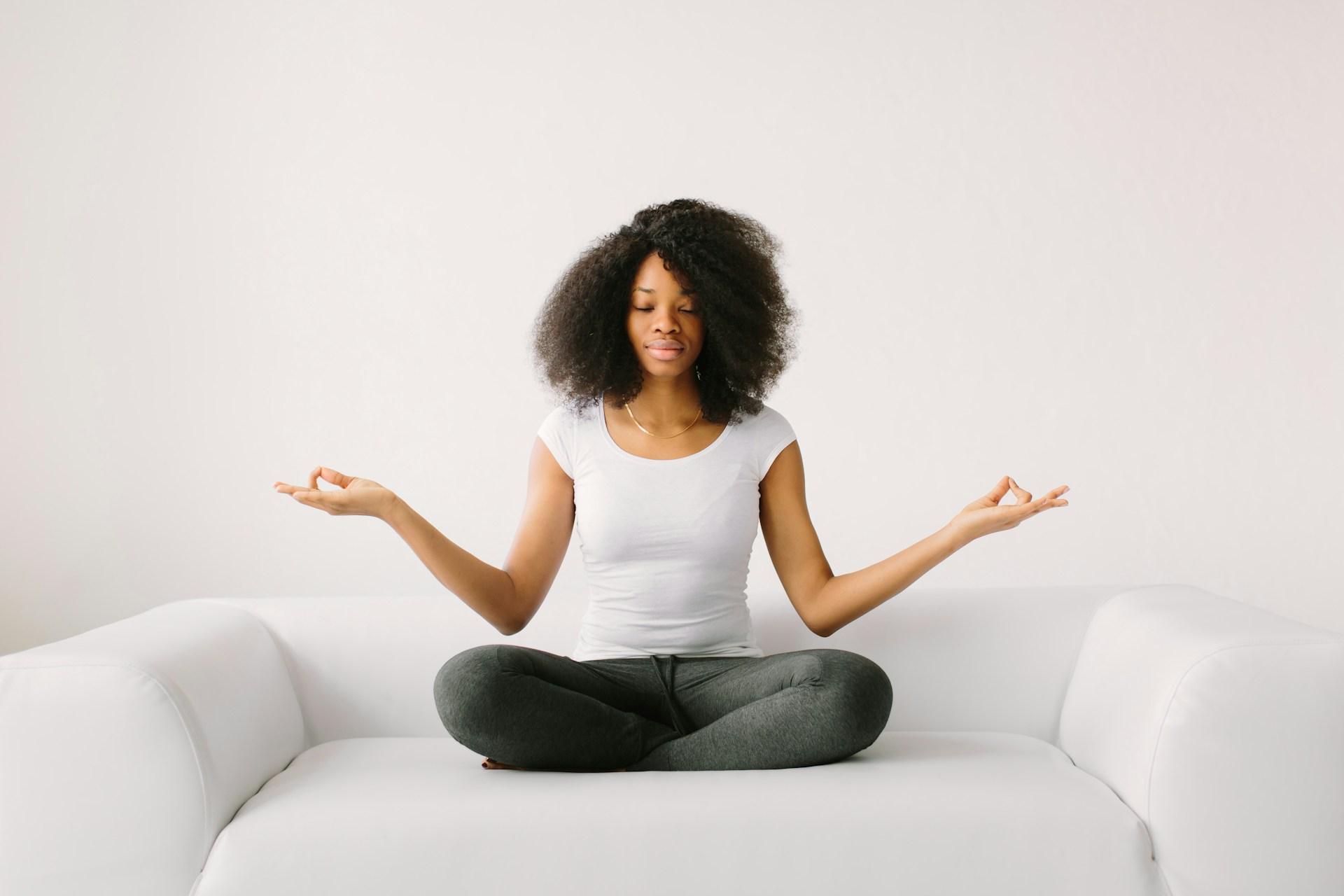
Another form of stability comes from practicing in the same place whenever possible. The brain learns context quickly, and a consistent location reduces the number of decisions you have to make. A chair, the edge of the bed, a floor mat, or a quiet corner of the couch can become your default spot. Even a small object, like a folded towel or a cushion, can act as a signal that tells your mind, “This is where we begin.” The goal is not a beautifully designed meditation space. The goal is low friction. Many people also struggle because they keep switching methods, searching for the technique that feels best. In practice, constant switching increases mental effort and makes the habit harder to sustain. It is more useful to choose one basic method and stick with it for at least two weeks. Breath focus is simple and widely accessible. A body scan can help people who feel stuck in their thoughts reconnect with physical sensation. Open monitoring can work once you are comfortable returning to an anchor. Loving kindness can be helpful when stress shows up as irritability or self criticism. There is no single best technique, but there is a best technique for building consistency, and it is usually the one you can repeat without overthinking.
A daily practice also needs to be portable. If meditation only works in perfect conditions at home, it will collapse the first time you travel, work late, or face a noisy environment. Building a “travel version” of meditation is a practical safeguard. One minute of breath counting can be done in a car before you step out, in a stairwell at work, in an airport, or even in a bathroom stall when you need a moment of reset. Another portable option is a brief grounding practice where you feel both feet on the floor, soften your jaw, drop your shoulders, and take three slow breaths before you continue. Portability matters because real life is portable. In fact, some of the most effective meditation moments are not morning or night, but transitions. Transitions are when your nervous system is already shifting from one context to another, such as moving from home to work, from one meeting to the next, or from work mode to family mode. A short practice during these moments can reduce emotional carryover and create a clearer boundary between tasks. Meditation becomes less about escaping life and more about closing loops so that stress does not leak into the next hour.
To keep the practice sustainable, it helps to define what success looks like. If you measure your meditation by how relaxed you feel afterward, you may become discouraged on days when the mind stays busy or anxious feelings rise to the surface. Those experiences do not mean the session failed. They often mean you noticed what was already there. A more reliable measure is completion. You sat, you practiced returning, and you finished. If you want a simple habit rule, “never miss twice” is often more useful than chasing long streaks. Missing a day happens. Let the next day be your return to the minimum. It is also worth remembering that sitting still is not the only entry point. For people who feel restless, walking meditation can be a practical alternative. A slow walk where you pay attention to foot contact, weight shifting, and the rhythm of steps can train the same skill of returning attention. This can fit naturally into breaks, post meal walks, or short resets when you feel mentally stuck. What matters is not the posture, but the act of noticing and returning.
Guided audio can also support beginners, because it reduces decision fatigue and provides structure. At the same time, relying on guidance forever can become a crutch. A balanced approach is to use guided sessions to establish consistency, then gradually alternate with unguided practice so you learn to direct your attention without external prompts. If noise is a problem, simple background sound or noise canceling headphones can reduce distraction while you build the habit, but the long term goal is to practice in the real world, not only in silence.
One of the most effective ways to make meditation feel relevant is to connect it to a small behavior change that follows immediately afterward. Meditation becomes a tool when it shapes what you do next. You might practice for two minutes and then respond to messages with less reactivity. You might reset before lunch and eat more slowly for the first few bites. You might pause before bedtime and choose not to scroll. When meditation links to a better next step, it becomes integrated into your day rather than isolated from it.
Finally, you need a protocol for bad days. The days when you most need meditation are often the days you least want to sit with yourself. A bad day protocol should be shorter and simpler than your normal routine. One minute of breathing with your hands on your chest and abdomen, focusing on a slow exhale, may be enough. The job on those days is not insight or calm. The job is to keep the habit alive. Incorporating meditation into daily life is less about adopting a new identity and more about building small routines that can withstand stress. When you choose a minimum session, attach it to a stable cue, practice in a consistent place, keep the technique simple, and create portable versions for travel and busy days, meditation stops being something you attempt when you have time. It becomes something you do because it fits. Over time, those small repetitions teach you the core skill meditation offers, the ability to return to the present without treating your own mind like an enemy.
 WhatsApp
 Instagram
 Threads