When people talk about employee safety compensation, they often imagine a simple payout after a workplace accident. In Malaysia, the reality is broader and more structured. Safety compensation is supported by a network of laws that work together to protect workers when injuries happen, to ensure income support during recovery, and to prevent employers from penalising employees who report hazards or pursue claims. Instead of relying on a single statute, Malaysia combines social security protection, minimum employment entitlements, and occupational safety duties to shape how compensation and workplace accountability operate.
At the centre of this framework is Malaysia’s social security protection for employment injuries, administered through SOCSO or PERKESO under the Employees’ Social Security Act 1969. This legal structure exists to make sure that employees who suffer an employment injury or occupational disease are not left to manage the financial consequences alone. The law recognises that harm can occur in different work-related contexts, and it links eligibility to whether the incident is connected to employment. In practice, that includes not only injuries that occur at the workplace itself, but also certain categories of accidents that happen while commuting or while carrying out duties related to work. This matters because many disputes arise when employers and employees disagree about whether an accident is truly work-related. The legal scheme sets the foundation for determining whether benefits apply.
What makes this protection particularly important is that it does not stop at medical assistance. It also acknowledges the income disruption that often follows an injury. When employees are certified as temporarily unable to work, the system provides a form of wage replacement through temporary disablement-related support, and when long-term impairment occurs, it can extend to permanent disablement support. These benefits create a more predictable pathway for recovery because employees are not forced to choose between rest and earning a livelihood. In a country where many households depend on steady monthly income, the certainty of structured support can be the difference between a manageable setback and a financial crisis.
Legal protection also appears in the way the system limits retaliation risks during recovery. A workplace injury can create vulnerability, especially when an employee fears that time away from work will be treated as poor performance or lack of commitment. Malaysia’s legal approach recognises this imbalance by restricting punitive employment actions in circumstances connected to temporary disablement support. The goal is not to prevent employers from managing operations, but to prevent recovery from becoming a reason for punishment. This is a crucial part of compensation protection because money alone is not sufficient if the employee’s job security is threatened the moment a claim begins.
At the same time, Malaysia’s legal system is careful about preventing overlapping payouts for the same period of incapacity. This is where the Employment Act 1955 becomes relevant. While it is not a work injury compensation scheme in the same way SOCSO is, it sets minimum standards for paid sick leave, which is often the first form of relief employees think of when they cannot work. The Employment Act provides baseline entitlements tied to length of service and outlines how sick leave should be handled through medical certification. However, the law also clarifies that paid sick leave does not apply in the same way when an employee is already receiving certain other statutory payments, including some forms of SOCSO-related periodical payments. In other words, Malaysia’s framework is designed to support employees while coordinating the flow of benefits so that one absence period is not paid twice under separate channels.
Beyond compensation and leave entitlements, employee protection relies heavily on laws that focus on prevention and on the right to raise safety concerns. The Occupational Safety and Health Act 1994 establishes duties that employers must meet to protect employees’ safety, health, and welfare. These duties are not merely advisory. They create a legal expectation that workplaces will actively manage risk, from equipment use and processes to supervision and training. For employers, this is important because compliance is not only about avoiding penalties. It is also about preventing incidents that can trigger compensation claims, reputational harm, and long-term employee distrust.
The Occupational Safety and Health Act also matters because it recognises that a worker’s willingness to speak up is a key part of preventing harm. In many organisations, safety failures persist not because hazards are invisible, but because employees fear consequences if they report them. Legal protection against discrimination for raising safety concerns helps address that reality. It signals that reporting hazards or participating in safety processes is not disloyal behaviour, but a protected action that supports workplace wellbeing. This protection strengthens the integrity of the compensation ecosystem because it reduces the likelihood that risks are ignored until they become serious accidents.
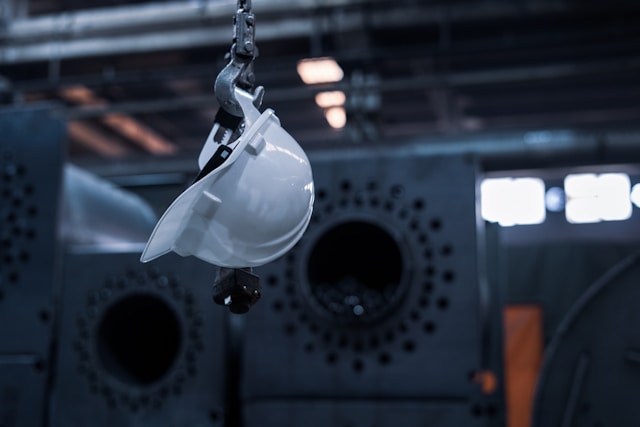
For certain sectors, especially those involving machinery and industrial settings, Malaysia’s legal landscape includes additional layers of safety regulation. These more specific rules reinforce the idea that safety is not one-size-fits-all. A low-risk office environment and a high-risk production floor require different controls, different training emphasis, and different compliance attention. The existence of industry-specific regulation is also a reminder that compensation systems and safety systems are connected. When an incident occurs, the question is rarely limited to how benefits are paid. It often expands into how risk was managed, whether requirements were followed, and whether lapses were preventable.
Another important point, especially for businesses that rely on diverse labour forces, is that safety compensation protections are not limited to one narrow category of employees. The legal and administrative direction in recent years has reinforced coverage expectations for foreign workers under the relevant social security schemes, with specific effective dates tied to scheme applicability. For employers, this removes ambiguity. Workforce composition does not reduce the obligation to provide statutory protection. Instead, it increases the responsibility to understand coverage requirements, registration rules, and contribution compliance.
Even with clear statutes, workplace incidents can lead to disputes, particularly when job security becomes contested after an injury. This is why Malaysia’s industrial relations framework also plays a role in the broader concept of protection. When employees believe they have been dismissed unfairly, the law provides a pathway to challenge the dismissal through established processes. While this is not “compensation” in the narrow financial sense, it is still part of safety protection because it addresses the fear that a workplace injury or a safety complaint might lead to sudden job loss.
Taken together, Malaysia’s legal protections for employee safety compensation form a system that does more than reimburse. It creates a structure that supports recovery, stabilises income, discourages retaliation, promotes reporting, and reinforces employer responsibility for prevention. For employees, this system matters because it reduces uncertainty at a moment when life has already been disrupted. For employers, it matters because compliance is not only a legal obligation, but also a signal of organisational maturity. The best-run businesses do not treat safety compensation as a crisis response. They treat it as part of a deliberate promise that, when harm occurs, the organisation will act fairly, lawfully, and with the employee’s dignity intact.
 WhatsApp
 Instagram
 Threads