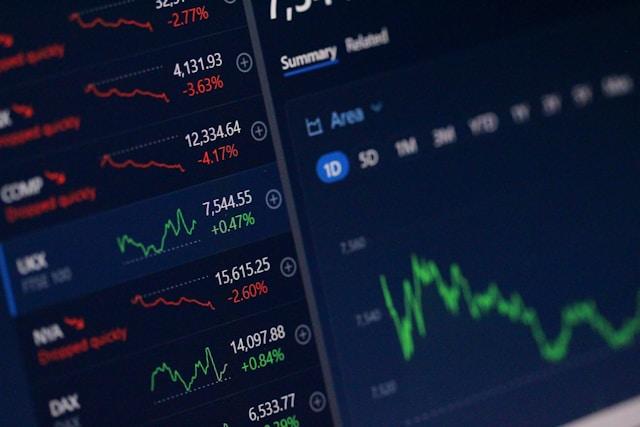
The primary disadvantage of investing in index funds is that you inherit the market’s full volatility because the fund is designed to follow an index rather than respond to changing conditions. Index funds track a defined basket of securities, so they rise when the market rises, but they also fall when the market falls. There is no active manager inside the fund trying to reduce exposure ahead of a downturn, shift into cash, or avoid sectors that look especially risky. This is not a hidden flaw. It is the price of simplicity, and it is the reason index funds can feel effortless in strong markets but unsettling in weak ones.
This disadvantage becomes most visible during periods of market stress, when investors naturally look for reassurance that someone is steering the ship. With an index fund, the strategy is to stay on course. If the broader market drops due to recession fears, higher interest rates, inflation shocks, or sudden global uncertainty, the index fund will reflect that decline. For long term investors, this tracking behavior is often acceptable because markets have historically recovered over time, although recovery timelines are never guaranteed. For investors who need their money on a shorter horizon, however, the downside can be more than uncomfortable. It can turn into a real problem if a withdrawal is required during a slump, because selling after a decline locks in losses and reduces the ability of the portfolio to rebound.
The same market matching design also means index funds are not built to deliver standout returns compared with the market itself. Their purpose is to capture the market’s return at a low cost, not to beat it. In practical terms, this means an index fund typically aims to deliver performance that closely mirrors its index, minus fees and small tracking differences. For many investors, that is a sensible bargain. Yet for those who expect a fund to protect them when conditions worsen or to outperform through smart stock selection, the limitation can feel disappointing. Index funds are intentionally predictable. They are not designed for tactical moves, and they do not try to win by being different.
What makes this disadvantage especially important is that it is not only a financial issue, but also a behavioral one. The hardest part of index investing is rarely the mathematics. It is the emotional discipline required to hold through declines, ignore frightening headlines, and avoid the temptation to sell when fear is high. Investors often overestimate their risk tolerance until they experience a real downturn. At that moment, the disadvantage of a passive approach becomes clear. The fund will not intervene, and the investor must decide whether to stay invested long enough for recovery to have a chance.
None of this means index funds are a poor choice. It means they work best when paired with an appropriate plan. Investors can reduce the impact of market volatility by building a portfolio that matches their timeline and comfort level, such as balancing stock index funds with bond funds or holding a cash buffer for near term needs. This approach helps ensure that short term expenses do not force selling at a bad time. It also reinforces the core advantage of index funds, which is steady participation in market growth, while acknowledging the core disadvantage, which is full exposure to market declines.
In the end, the main disadvantage of index funds is that they will not protect you from the market’s downturns because they are designed to mirror the market, not outsmart it. Index investing rewards patience and long horizons, but it asks investors to accept uncertainty along the way. When that trade off is understood clearly from the start, index funds can still be a strong foundation. They simply need to be used with realistic expectations and a portfolio structure that can endure volatility without forcing costly decisions at the wrong time.
 WhatsApp
 Instagram
 Threads
-1.jpg&w=3840&q=75)




.jpg&w=3840&q=75)