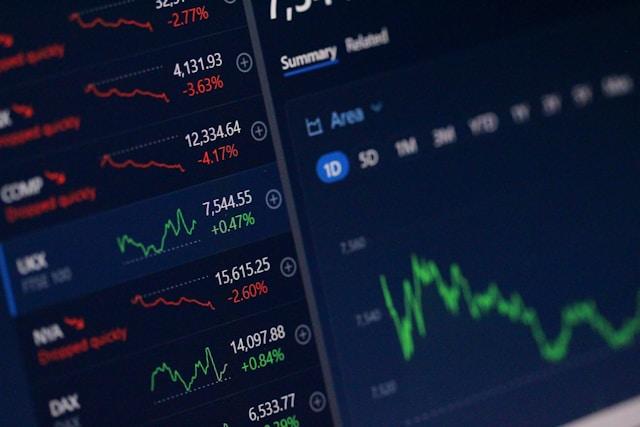
An index fund is one of the simplest ways to participate in the growth of financial markets without needing to become an expert stock picker. At its core, an index fund is a type of investment fund designed to follow the performance of a specific market index. A market index is a tracked collection of investments that represents a particular slice of the market, such as large companies, technology firms, or the broader economy. When someone invests in an index fund, they are essentially choosing to invest in that whole collection at once, rather than selecting individual stocks or bonds one by one.
To understand why index funds matter, it helps to think about what an index represents. An index is built using a set of rules. For example, an index might include the largest public companies in a country, or it might track the performance of companies in certain sectors. The index itself is not something investors can buy directly. Instead, an index fund acts like a bridge. It holds investments that match the index as closely as possible, so that the fund’s performance moves in line with the index it tracks. If the index rises, the fund tends to rise. If the index falls, the fund generally declines too.
What makes index funds especially popular is that they remove much of the guesswork from investing. Instead of trying to predict which companies will perform best, index fund investors focus on owning a broad slice of the market and letting long-term growth do the heavy lifting. This is often called passive investing, not because investors do nothing, but because the fund itself does not rely on constant active decision-making. The fund follows the index’s rules, adjusting its holdings when the index changes. This approach stands in contrast to actively managed funds, where a fund manager tries to outperform the market by buying and selling investments based on research, forecasts, or personal conviction.
One of the greatest advantages of index funds is diversification. Diversification means spreading money across many investments so that the performance of any single company does not determine the fate of the entire portfolio. By owning an index fund, an investor can instantly hold exposure to dozens, hundreds, or even thousands of companies. If one company performs poorly, its impact is usually softened by the many others held in the fund. This reduces the risk that comes from concentrating money in a small number of stocks. Diversification does not eliminate risk completely, because markets as a whole can still rise and fall, but it helps protect against the shock of a single-company collapse.
Cost is another major reason index funds are widely used. Because index funds are designed to follow an index rather than outsmart it, they often require less research, fewer trades, and smaller management teams compared with active funds. This usually translates into lower fees, commonly expressed through something called an expense ratio. Even small differences in fees can matter over time because investing is built around compounding. When fees are high, they quietly eat into returns year after year. When fees are low, more of the investor’s money stays invested and has the chance to grow.
Index funds also come in different forms, with the two most common being index mutual funds and index ETFs. Both can track the same index, but they differ in how they are traded. Index mutual funds are typically priced once a day after the market closes, and investors buy or sell at that end-of-day price. Index ETFs trade throughout the day like ordinary stocks, meaning their prices move in real time during market hours. For many investors, the choice between the two comes down to convenience, platform availability, and investing preferences rather than the basic concept of indexing itself.
Despite their simplicity, index funds are not risk-free. Because they are tied to the market, they will decline when the market declines. Investors who use index funds still need to accept that short-term volatility is normal, especially in stock-based index funds. It is common for markets to experience downturns, and index fund investors must be prepared for periods when values fall before they recover. This is why index funds are often best suited for long-term goals, such as retirement or wealth building over many years. People who need their money in the near term typically lean toward safer, more stable options, such as cash or short-term fixed-income instruments, rather than stock-heavy index funds.
Index funds also reflect the structure of the index they follow, and that can create concentration in certain areas. Many major indexes use market-cap weighting, meaning larger companies carry greater influence in the index and therefore in the fund. If a few large companies dominate the market, the index fund will naturally be more heavily exposed to them. This is not necessarily a flaw, but it is an important detail because some investors mistakenly assume that an index fund always spreads money evenly. In reality, index design shapes what the investor owns.
Ultimately, an index fund is a practical tool built around a straightforward idea: instead of trying to beat the market, it aims to match the market. By doing so, it offers investors diversification, typically lower costs, and a clear framework for long-term participation in economic growth. For many people, this approach is appealing because it reduces complexity and helps investing become a consistent habit rather than a constant series of decisions. In a world where emotional reactions and short-term market noise often derail financial plans, index funds stand out as a steady option for those who want a simple, structured way to build wealth over time.
 WhatsApp
 Instagram
 Threads
-1.jpg&w=3840&q=75)


.jpg&w=3840&q=75)