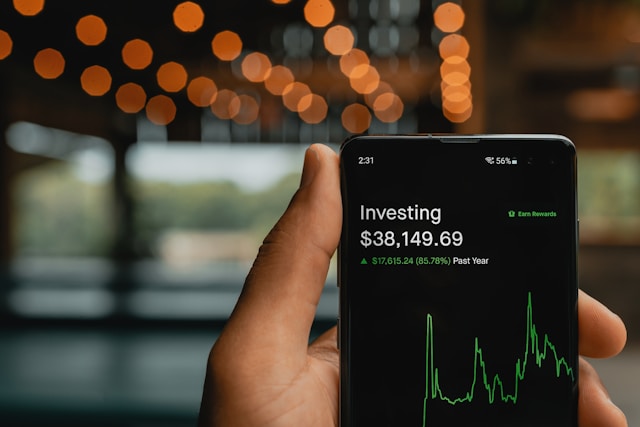
The impact of AI on the investment industry becomes clearer when you stop imagining a single all knowing machine that picks winning stocks and instead look at investing as a chain of everyday work. Research has to be gathered, reports have to be interpreted, trades have to be executed, portfolios have to be monitored, risks have to be managed, and clients have to be kept informed in language that feels calm and credible. AI is now embedded across that entire chain. In some places it replaces repetitive labor. In other places it accelerates decision cycles that used to take days into something that happens in minutes. The result is not simply faster investing. It is a reshaping of how advantages are created, how mistakes spread, and how trust is earned.
Research is often the first area people notice because it touches the visible part of the industry, the notes, summaries, and market commentary that flow through banks, brokers, and financial media. AI tools can scan long filings, parse earnings call transcripts, compare guidance language across quarters, translate foreign disclosures, and pull out key risks at a speed that used to require teams of analysts. This changes the economics of being informed. When more people can process the same public information quickly, speed alone becomes less valuable. The advantage shifts toward framing, judgment, and the ability to combine public information with unique data or a deeper understanding of context. The risk is that AI can produce polished certainty even when the underlying truth is uncertain. Investing is a domain where false confidence is expensive. If investors treat AI generated summaries as final answers rather than starting points, the industry can scale misunderstanding faster than it can scale insight.
Trading and execution reflect a more mature version of AI adoption. Markets have been shaped by automation for decades, but AI expands who can access sophisticated tools and how widely they are deployed. Execution algorithms can break large orders into smaller pieces, predict short term liquidity, and reduce the market impact of trades. For large asset managers, shaving even small costs from execution can meaningfully affect long term performance. Yet broader access to similar tools also compresses certain forms of advantage. When many firms use comparable models trained on similar data, strategies can become crowded. The same signals can point to the same trades, and what once worked because it was rare can stop working when it becomes common. AI does not make markets perfectly efficient, but it can raise the bar for what counts as a durable edge.
Risk management is another area where AI offers real gains and real danger at the same time. AI can help detect hidden concentrations, map exposures across portfolios, run scenarios quickly, and flag anomalies that might be missed by human teams, especially in fast moving markets. But the more complex and less interpretable the system becomes, the easier it is to mistake sophistication for safety. Model risk becomes central. AI learns patterns from historical data, and history is not a contract. When market regimes change, the relationships a model learned can weaken or reverse. A risk framework that relies too heavily on a model’s learned behavior can create a false sense of control, precisely when humility is most needed.
Portfolio construction is also shifting. Asset managers are using AI to support signal generation, factor modeling, and optimization. In the best case, AI improves diversification and reduces emotional decision making. In the worst case, it becomes a machine for producing correlated bets, especially if many firms draw from similar datasets and use similar methods. That is not merely a performance concern. It can become a stability concern. When too many participants hold overlapping positions, markets can become more fragile during stress events because the rush to exit looks like a synchronized stampede.
Retail investing is being transformed not only through trading tools but through the experience layer around investing. AI is increasingly used in customer support, education, and personalized explanations of market movements. Many platforms now aim to make investing feel guided, conversational, and intuitive. That can help more people understand basic concepts like diversification, time horizons, and risk tolerance. It can also distort behavior if the AI is designed to maximize engagement instead of outcomes. If a platform profits from frequent trading, the AI can subtly encourage activity, even when the best decision for a long term investor is to do nothing. There is a growing gap between feeling informed and actually making better decisions, and AI can widen that gap when it provides confident language without disciplined context.
Fees and business models are being pressured in complicated ways. AI reduces the cost of producing research, generating reports, onboarding clients, and managing routine compliance tasks. In theory, lower costs should flow into lower fees for investors. In practice, cost savings are often reinvested into better tools, more data, and stronger distribution. Fee compression is most likely in areas that become clearly commoditized, such as basic indexing and standard rebalancing. At the same time, AI can justify premium pricing for services that feel truly differentiated, such as tax aware portfolio management, personalized planning, and institutional grade analytics made available to smaller advisors. The value proposition shifts from simply having access to markets toward having systems that help investors behave well inside markets.
Advice is one of the most consequential frontiers. AI makes advice like interactions cheap and scalable, which can democratize help for people who previously could not afford a human advisor. It can offer budgeting guidance, retirement simulations, and behavioral prompts. But advice is also where liability and ethics become unavoidable. When AI recommends a product or a strategy that harms a client, responsibility cannot be shrugged onto a model. This is why firms often insist their tools are educational rather than advisory, even when they function in ways that strongly resemble advice. The industry will keep testing that boundary because the demand for personalized guidance is enormous, and AI is the most scalable way to meet it.
Regulation and compliance will shape how far this goes. Regulators care about suitability, transparency, conflicts of interest, market integrity, and systemic risk. AI makes each of these harder to supervise because decisions can be probabilistic, opaque, and shaped by training data that is not always visible to outsiders. At the same time, firms will increasingly use AI to monitor communications, detect suspicious activity, and create audit trails. The temptation will be to treat AI as the compliance solution itself, but regulators will still demand governance, controls, and accountability. A model can assist, but it cannot replace responsibility.
The information environment surrounding markets is changing as well. AI makes it easier to create convincing misinformation, including fake clips, fabricated documents, and false narratives that spread quickly and can move prices. This raises the noise floor and increases the need for verification. At the same time, AI can be used defensively to detect fraud, identify unusual patterns, and spot coordinated manipulation. The result is an arms race where both offense and defense improve. Firms that treat information integrity as a core part of risk management will be better positioned than those that assume the old media environment still applies.
Workforce changes follow naturally. Some roles shrink as routine writing, reporting, and first line support are automated. Other roles grow, particularly those involving data infrastructure, model governance, product design, and the ability to translate between finance and technical systems. The most valuable professionals in the AI shaped investment industry will not be defined only by their finance expertise or their coding skill, but by their ability to understand how a model can fail and how to integrate it into a disciplined process without letting it take over.
For investors, the practical implications are both simple and profound. Investing will feel more guided and more personalized, with more prompts, explanations, and conversational tools. The line between a platform and an advisor will blur. Markets may also experience sharper moves and faster narrative cycles as information processing accelerates and strategies converge. Rules and standards will evolve as regulators respond to new forms of opacity and new kinds of risk. In that environment, the best use of AI is not as an authority, but as an assistant. It can help you summarize, compare, and generate questions worth investigating, but it should not replace your decision framework. The impact of AI on the investment industry is therefore not only technological. It is behavioral. It changes what firms can do, what investors feel, and how quickly mistakes can spread. Those who treat AI as a tool for clarity and consistency will benefit. Those who treat it as a shortcut to certainty will eventually discover that markets punish confidence that is not earned.
 WhatsApp
 Instagram
 Threads