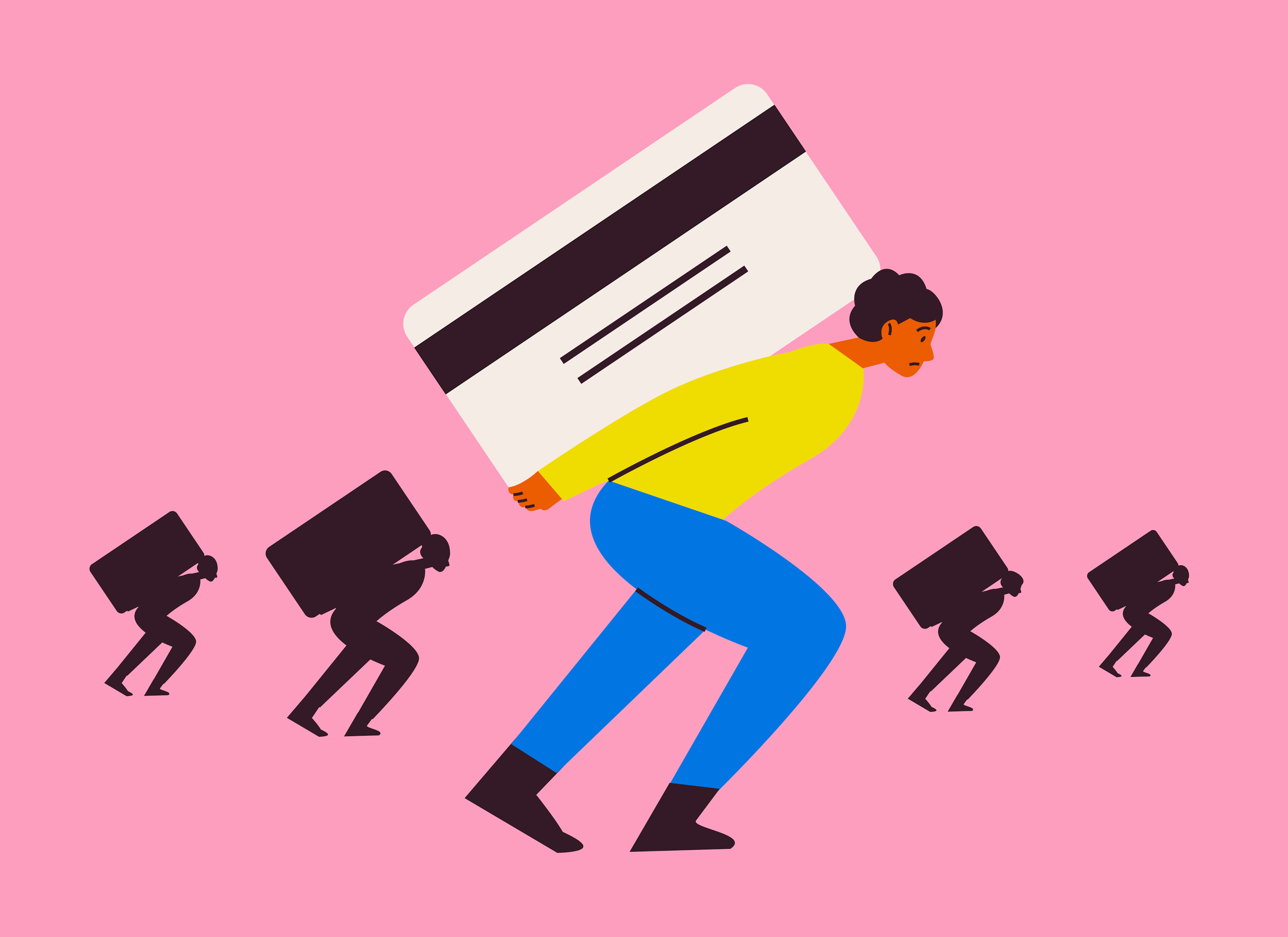
Credit mistakes can feel permanent when you are young, especially when a score drops quickly and the consequences show up everywhere. A declined card at the worst moment, a higher interest rate, a rental application that suddenly feels stressful. For Gen Z, rebuilding credit after financial mistakes is not about finding a shortcut or proving you are “good” with money. It is about restoring predictability. Credit systems reward patterns, not intentions, so the way forward is to understand what went wrong, stop the damage from repeating, and build enough clean history that the past becomes less important than the present.
The first step is clarity. Many people try to rebuild without knowing exactly what is on their credit file. That is like trying to fix a leak without finding the pipe. Gen Z should start by reviewing their credit reports to identify what is actually pulling the score down. In most cases, the culprits are late payments, high credit utilization, and negative marks like collections or charge-offs. Each of these issues affects credit differently, which is why guessing can waste months. When you know whether the damage is coming from missed due dates, balances that look too high, or unpaid debts that have moved to collectors, you can choose the right actions instead of chasing random advice.
Late payments usually hurt the most, especially if they are recent. A single missed payment that passes the 30-day mark can stay on a credit report for years. The frustrating part is that the reason does not matter to the system. Whether you forgot, whether your paycheck came late, whether you were overwhelmed, the result is the same. But the good news is that credit scoring models tend to care a lot about recent behavior. That means time is not just a passive factor. It is part of the strategy. The moment you stop missing payments and start stacking on-time months, you begin sending a stronger signal. The best way to make that signal consistent is to remove human error from the process. Setting up autopay for at least the minimum payment is often the simplest protection. If autopay feels risky because of cash flow or fear of overdrafts, paying early and setting reminders still works. The important thing is to stop treating the due date as the moment to act. A due date is a deadline, and deadlines are where life interferes.
High utilization is another common trap for Gen Z because many younger borrowers start with low credit limits. If your limit is small, even normal spending can make your balance look dangerously high when the statement closes. Utilization is not just about how much debt you carry overall. It is about the snapshot that gets reported. Someone can pay off their card every month and still look risky if their statement closes with a high balance. This is why some people do everything “right” and still struggle to see improvement. Lowering utilization is often one of the fastest ways to lift a score because it changes the risk picture immediately. Paying down balances helps, but even timing can help. Making more than one payment in a month can keep the reported balance lower, especially if you pay before the statement date rather than waiting until the due date. The goal is to make your credit profile look calm, not stretched.
Once the immediate issues are under control, it becomes important to check for errors. Credit reports are not always accurate, and mistakes can keep a score lower than it should be. Accounts you do not recognize, duplicated debts, incorrect late payments, or balances that do not make sense should be disputed with documentation. This step is not exciting, but it is powerful because correcting errors can improve your profile without waiting for time to pass. Gen Z, who moves often and changes addresses frequently, is especially vulnerable to billing issues and reporting mistakes that can quietly turn into credit damage.
Rebuilding also requires adding positive history, particularly if your credit file is thin or if existing accounts are already damaged. For many Gen Z borrowers, a secured credit card can be an effective tool because it allows you to rebuild without needing strong credit to qualify. You place a deposit, receive a credit line, and your payments get reported like a regular card. The key is to use it in a controlled way. A secured card should not become a new spending lifeline. It should be a training ground for consistency. Putting one small recurring bill on the card and paying it off automatically can create clean payment history without inviting temptation.
Credit-builder loans are another option for people who need more positive data. These products are structured to help you build a payment record by making regular payments toward funds that are held in reserve until the loan ends. The benefit is that you create a steady trail of on-time payments, but it only works if the payment fits comfortably. Any rebuilding tool that stresses your budget becomes a risk, because the next missed payment undoes your progress. Rebuilding is not about adding more financial pressure. It is about reducing it.
Some borrowers consider becoming an authorized user on a family member’s or trusted friend’s credit card. This can help if the primary account has strong history and low utilization, because that positive information may appear on your report. However, it is also a relationship risk. If the primary cardholder overspends or misses payments, you can be pulled down with them. This option only makes sense if the other person is reliably disciplined and if the arrangement is clear.
When collections or charge-offs enter the picture, rebuilding requires patience and strategy. Paying off a collection is not always as straightforward as it sounds, because paying does not automatically remove it from your report. Before paying, it is important to confirm the debt is legitimate and to understand your options. In some cases, collectors may agree to settle for less than the full amount. In some cases, they may agree to remove the collection in exchange for payment, though this depends on the collector and the situation. Any agreement should be in writing before you send money. The point is not to avoid paying what you owe. The point is to handle it in a way that improves your credit profile rather than simply draining cash without changing how the debt is reported.
One of the biggest mistakes Gen Z can make during rebuilding is applying for too much new credit too fast. Each application can lead to a hard inquiry, and multiple inquiries in a short period can make you look desperate for credit. It also increases the chance of rejection, which feels discouraging and can lead to more frantic applications. The better approach is to choose one or two tools and use them consistently for a stretch of time. Credit recovery is more about steady patterns than aggressive action.
Another common instinct is to close old cards out of frustration or embarrassment, especially if the card is tied to a period when money felt out of control. But closing accounts can reduce available credit and potentially raise utilization, and it can shorten the average age of your accounts over time. If a card has no annual fee and you can keep it open without using it irresponsibly, it may help to keep it active with small, manageable charges. If a card has an annual fee that offers little value, closing it might still be the right decision, but it should be done thoughtfully, not emotionally.
Rebuilding credit also means being honest about timelines. Results are not instant, but they are real. In the first month, progress often comes from stopping late payments, lowering balances, and correcting errors. In the first three months, you may start seeing changes if your utilization drops and your on-time streak begins to build. Over six to twelve months, consistent behavior becomes visible as stability, and your profile may become strong enough to qualify for better products. Over a longer horizon, the weight of old mistakes fades as your clean history grows. What feels like a permanent label becomes an outdated chapter.
For Gen Z, credit rebuilding is not just a financial process. It is a behavioral shift away from avoidance. Many credit mistakes grow from ignoring messages, missing bills because of overwhelm, or delaying decisions until they become emergencies. A rebuild plan works best when it creates structure that makes avoidance harder. Automating payments, simplifying accounts, and setting up a basic buffer for essentials can protect you from the next slip. If income is inconsistent, even a small emergency cushion can prevent a missed payment and preserve progress. Credit strategy cannot replace stable cash flow, but it can support it when you create safeguards.
In the end, rebuilding credit after mistakes comes down to one idea: making yourself look predictable again. That predictability is not about perfection. It is about showing, month after month, that your financial life is stable enough to handle credit responsibly. The system rewards boring patterns, and boring is powerful. It lowers rates, increases approvals, and reduces the stress that comes with being judged by a number. For Gen Z, the real win is not just a higher score. It is the freedom that comes when past mistakes stop controlling future options.
 WhatsApp
 Instagram
 Threads