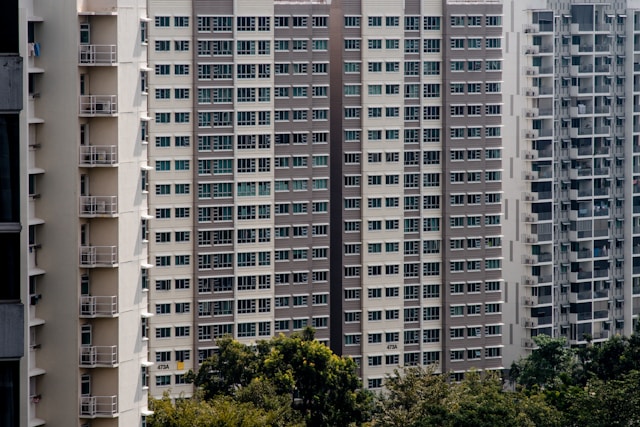
Affording an HDB flat in Singapore is often framed as a single milestone, the moment you finally have enough savings or your income hits a certain number. In reality, it is closer to a process with checkpoints. The households that succeed tend to treat housing affordability as something they can actively shape over time, not something that simply happens to them. They work backwards from the rules that govern eligibility, grants, and loan size, then adjust their finances and expectations so that the numbers line up. When you view the purchase this way, “affording an HDB flat” becomes less about luck and more about preparation.
The first advantage comes from clarity. Many buyers start by browsing listings or scrolling through photos, but the most useful starting point is understanding how the system will assess you. Your ability to buy is constrained by eligibility and loan rules that do not care about emotion. That is why the HDB Flat Eligibility letter matters so much. It brings forward what would otherwise become painful surprises later. It gives you a consolidated view of whether you are eligible to buy, what housing grants you may qualify for, and the loan options likely available to you. In practical terms, it is a diagnostic tool. If your HFE outcome does not match your expectations, that is not a dead end. It is a signal that you still have time to improve the inputs that the system uses to judge affordability.
Those inputs usually fall into a handful of categories: income stability, existing debt obligations, CPF readiness, and the flat choice itself. Income is not only about how much you earn, but also how consistent and documentable it is. A household with irregular income, frequent job changes, or poorly documented earnings may find that their assessed borrowing capacity is weaker than what their everyday lifestyle suggests. If you are planning to buy within the next year, one of the most practical moves is to keep your income narrative stable. That does not mean you cannot progress in your career, but it does mean you should avoid making financial commitments that assume future income increases will arrive on schedule. A cautious affordability plan is built on what can be proven, not what might happen.
Debt is the next major factor. Many Singaporeans underestimate how much consumer debt affects their ability to get a housing loan, especially when the system caps how much of your income can be used for mortgage payments and total monthly debt. A car loan, large credit card balances, and instalment plans can quietly reduce the loan size you can qualify for. This matters because affordability is not only the sticker price of the flat. It is also whether the monthly repayment fits comfortably within the ratios that lenders and the broader framework use. If you want to improve your chances of affording an HDB flat, reducing monthly debt obligations is often more powerful than trying to increase income in a short period. Paying down a high monthly commitment can free up servicing capacity immediately, whereas a pay raise may take longer and may not be assessed as fully as you expect depending on timing and documentation.
CPF planning sits at the centre of the Singapore housing journey, and it can be both a strength and a trap. It is a strength because CPF Ordinary Account savings can form a large part of the downpayment and monthly instalments. It is a trap when households treat CPF as an unlimited housing wallet and drain it to the last dollar without considering resilience. A flat is not truly affordable if you can pay only when nothing goes wrong. The stronger approach is to preserve a buffer, because life is messy. Jobs change, family needs expand, health issues appear, and big expenses arrive uninvited. If you empty every reserve just to cross the finish line, you may get the keys but lose your breathing room. This is where buyers can benefit from thinking like risk managers. The goal is not merely to pass affordability checks today. The goal is to remain stable for years. A good mortgage plan is one that survives imperfect months, not one that works only in ideal conditions. That mindset changes how you use CPF, how much cash you keep aside, and how aggressively you stretch for a location or a larger flat. It is tempting to maximise what you can buy, but the wiser move is to choose what you can sustain.
Another quiet but important shift in recent years is that financing conditions have become more demanding in ways that affect first timers and upgraders alike. When loan to value limits change, the headline impact is straightforward, a larger downpayment requirement. The deeper impact is that households must be more deliberate about building the upfront funds needed to begin the purchase, not just the monthly ability to repay. For many buyers, the downpayment becomes the bottleneck. If that is your constraint, then the most effective affordability strategy may be to widen your runway. Build CPF balances steadily, strengthen your cash savings, and avoid major commitments that delay that accumulation. Time is not just time. Time is CPF contributions compounding into capacity.
Housing grants are a major lever for affordability, but only if you treat them as part of your main plan rather than a lucky bonus. The grant system is designed to support eligible buyers, especially first timers, but eligibility depends on income, household profile, and whether you are buying new or resale. The strongest buyers understand this landscape early. They know what they might qualify for, they understand how income tiers affect grant amounts, and they make flat choices that allow them to use support strategically. For a buyer who qualifies, grant stacking can meaningfully change what “affordable” looks like. But grants are not magic. You still need a coherent plan that fits within loan rules, cashflow reality, and your longer term life goals.
The resale versus new flat decision is where many Singaporeans get stuck, because they compare only price and ignore the total cost of timing. A new flat can offer a lower entry price and a more predictable process, but it often demands patience. If you need space sooner, you may spend years paying rent or living in a cramped arrangement while waiting. In those cases, “cheaper” can become more expensive in the full picture. A resale flat may cost more upfront, but it can reduce the years of transitional cost and give you stability sooner. Affordability is not simply the price tag. It is also how the purchase interacts with your timeline, your family plans, and your monthly reality.
Location decisions can also be reframed as financial choices rather than purely lifestyle preferences. Buying near parents may qualify some households for additional grant support, and even when grants are not the deciding factor, proximity can reduce costs in other ways. Childcare logistics become easier, eldercare becomes more manageable, and commuting time can drop. These benefits are not always visible on paper, but they affect the household budget and stress levels. When you view housing as a platform for your daily life, not just an asset, these second order effects become part of the affordability equation.
Flat choice itself has become more nuanced under the newer classification framework for new flats, where the rules and restrictions differ by category. This has shifted how buyers should think about long term value and flexibility. In the past, some households stretched for prime locations partly because they believed the resale upside would compensate for the sacrifice. But when policies are designed to moderate windfall gains and attach conditions to certain categories of flats, the story changes. A flat can still be a good decision, but you need to understand the tradeoffs. If the rules reduce future upside or increase constraints, then affordability should be evaluated primarily through the lens of livability and sustainability. A home that fits your real life, with rules that match your timeline, is usually more valuable than a home that forces you into years of financial tension.
This brings us to a key idea: many buyers struggle not because they cannot afford any HDB flat, but because they insist on a specific version of one. They picture a particular estate, a particular size, and a particular proximity to MRT, then build their financial plan around that ideal. When the numbers do not work, they feel the system is impossible. In reality, the system is signalling a mismatch between the target and the inputs. The most effective buyers keep their goals flexible at the start. They identify what is non negotiable, such as access to family support or a certain school zone, and what is adjustable, such as exact block location, floor level, or whether the flat is newly renovated. Flexibility expands your options, and options increase your odds.
Improving your chances of affording an HDB flat also means preparing for the purchase like a project, not a wish. A project has a timeline, a budget, and a risk plan. If you want to buy within twelve months, you can work backwards and build a pre purchase sprint. Use that time to clean up debt obligations, stabilise income documentation, accumulate CPF and cash buffers, and refine your flat search to match what you can sustainably finance. When you do this, you do not just increase the odds of getting approved. You also reduce the chance of buyer’s remorse, because you have tested your assumptions against real constraints. Even after approval, the long game matters. Your mortgage should not crowd out your life. A household that becomes “house rich and cash poor” may appear successful on paper, but it often experiences stress, limited choices, and an inability to respond to surprises. This is why an affordability plan should include room for maintenance costs, insurance, family expenses, and basic quality of life. Your home should support your future, not consume it.
The heart of the issue is that Singapore’s housing system rewards financial steadiness. It rewards households that keep their obligations manageable, that plan around their actual income rather than their hoped for income, and that choose flats with a clear understanding of the rules. If you want to improve your chances of affording an HDB flat, treat the journey as a series of decisions you can optimise. Start early with eligibility clarity, reduce monthly debt drag, build CPF and cash buffers, understand how grants shape your true budget, and choose a flat type and location that fits your life stage. When affordability becomes a system you manage, the goal becomes less intimidating. It becomes a process you can actually control.
 WhatsApp
 Instagram
 Threads