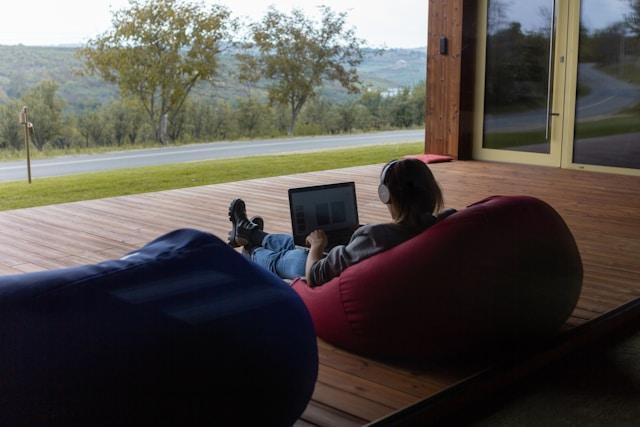
Remote work is often described as a perk, but for many employees it functions more like a redesign of how work happens. When a company removes the physical office, it also removes a wide set of quiet supports that employees relied on without noticing: the rhythm of arriving and leaving, the ease of asking a quick question, the background sense of what matters most, and the social cues that signal whether someone is doing well. Some people adjust quickly by rebuilding structure and communication habits on their own. Others struggle because the workplace has not replaced the scaffolding that the office used to provide.
A common mistake is assuming remote work is simply the same job performed in a different location. In reality, remote work changes how accountability is communicated, how decisions are clarified, and how trust is built. In an office, small uncertainties are resolved through casual interactions, short hallway conversations, or a quick glance at what others are doing. At home, that same uncertainty can linger for hours because reaching out feels more disruptive when it requires a message, a call, or a meeting. The extra effort involved in asking for clarity raises the threshold for communication, and when people communicate less, confusion grows.
Role clarity becomes one of the biggest dividing lines. In a physical workplace, employees often learn through proximity. They observe how experienced colleagues handle problems, they overhear shifting priorities, and they absorb expectations through daily exposure to the organization’s norms. Remote settings reduce this passive learning. If responsibilities, priorities, and standards are not clearly documented, employees must guess what “good performance” looks like. That guessing creates anxiety, delays, and uneven results. Remote work is especially challenging for employees who are early in their careers, new to a company, or stepping into unfamiliar responsibilities because they are still building their understanding of how the organization operates. Without clear guidance, they spend energy trying to interpret signals rather than completing work with confidence.
Communication itself also becomes heavier. Remote work turns many quick interactions into messages that must be written clearly and read carefully. Waiting for replies introduces delays, and video calls demand intense focus because people try to read facial expressions through screens while managing how they themselves appear. Over time, this can create a feeling of being busy all day while still feeling uncertain about what was accomplished. When communication is costly and slow, employees can become hesitant to ask questions, which increases mistakes and extends timelines.
Another source of struggle comes from visibility anxiety. Many workplaces still reward presence, even if they do not admit it. When employees are no longer physically seen working, some fear they will be assumed to be doing less. That fear can push them into behaviors that look productive but do not create meaningful output. They may stay online late, respond immediately to every message, or send frequent updates that are more about reassurance than progress. In this way, remote work can encourage performance theater, not because employees lack motivation, but because they worry the organization equates visibility with value.
Isolation also plays a major role, but it affects people differently. Some employees gain energy and confidence from being around colleagues, even in quiet moments. Being part of a shared space reduces uncertainty and provides a subtle sense of belonging. When that shared space disappears, silence can feel like disconnection rather than focus. If an employee also lacks clarity about expectations, isolation intensifies the emotional weight of uncertainty. What appears from the outside as disengagement may actually be a person struggling with detachment, where they no longer feel anchored to the team’s momentum.
Practical living conditions can add another layer of difficulty. Remote work assumes people have a stable workspace, reliable internet, and an environment that supports concentration. Many do not. They may work at kitchen tables, share rooms with family members, manage noise throughout the day, or constantly shift locations inside the home. Even if an employee has the skills for the job, the environment introduces friction that the office was designed to remove. Because these circumstances can feel personal or embarrassing, some employees avoid discussing them, which keeps the root problem hidden.
Remote work also demands strong self regulation. Offices provide built in structure through routines such as commuting, scheduled lunch breaks, and the natural ending of the day when people leave. At home, employees must create their own anchors. This is not purely a matter of personality; it is a learned skill. Employees who have not developed reliable planning habits can feel like time becomes slippery. Starting tasks can feel harder, breaks may become unbalanced, and the line between work and rest can blur. When someone struggles with motivation in a remote setting, it is often because the environment lacks cues that help the brain shift into work mode.
Management practices can unintentionally magnify these challenges. In a physical workplace, managers notice subtle signs that someone is confused or stuck: a hesitation after a meeting, a quiet moment at a desk, a quick conversation that reveals uncertainty. Remote settings remove many of these signals. If a manager only checks in during scheduled meetings, problems may build in silence. By the time performance drops, the employee may have been stuck for weeks, and the discussion becomes focused on outcomes rather than on the system that failed to provide timely support.
Onboarding is one of the clearest examples of this gap. Many organizations still rely on informal learning, assuming new hires will understand what to do by watching others and absorbing the workplace culture. Remote onboarding requires explicit pathways: what to read, who to ask, how decisions are made, what success looks like in the first month, and what standards matter most. When those pathways are missing, new employees often internalize confusion as personal failure, even though the real issue is the lack of a structured ramp into the role.
Cultural factors also shape how comfortable employees feel seeking help. Some people come from workplaces where asking questions is encouraged. Others come from environments where questions are treated as weakness. Remote work increases the number of moments where clarification is needed because observation is limited. If an employee fears looking incompetent, they may delay asking. Delayed questions turn small uncertainties into larger mistakes, and repeated mistakes erode confidence. The longer the pattern continues, the more remote work feels discouraging, even if the employee’s potential is strong.
Ultimately, many remote work struggles are not evidence that an employee is incapable. They are evidence that conditions have changed faster than support systems. The most useful shift for leaders is to stop treating remote work as a test of personal toughness and start treating it as a design problem. The central question becomes what the office handled automatically that the company has not intentionally replaced. When the answer is clarity, coaching, predictable decision making, or a sense of connection, then the solution lies in building better systems rather than judging individuals.
Leaders can diagnose the issue by examining where confusion lives. Missed deadlines often trace back to unclear ownership, shifting priorities, or vague definitions of what is considered finished. Silence can reflect uncertainty about how progress should be communicated. Excessive meetings can signal that decisions and documentation are weak, so people overcompensate with calls to reduce anxiety. A simple way to spot system problems is to ask whether the employee’s difficulties would shrink if they sat next to a strong performer in an office for two weeks. If the answer is yes, then the problem is not remote work itself. The problem is that the organization has been relying on proximity to deliver structure.
Remote work becomes sustainable when leaders replace mysteries with clear expectations. That does not mean creating endless rules. It means defining ownership, priorities, and what high quality work looks like so employees do not waste energy guessing. It also means creating a consistent cadence, not in the form of constant meetings, but as a predictable rhythm of decisions, feedback, and check ins. When people know where questions belong and when answers arrive, anxiety drops and productivity rises.
In the end, remote work should be treated as a skill transition, not a benefit that requires no adjustment. Employees may need guidance on planning their day, communicating clearly, and creating boundaries at home. Providing that support is not pampering; it is enabling people to succeed in a new operating environment. Remote work exposes what was previously carried by the office itself. When organizations intentionally rebuild those supports, employees are far less likely to struggle, and remote work becomes not only possible, but genuinely effective.
 WhatsApp
 Instagram
 Threads

.jpg&w=3840&q=75)