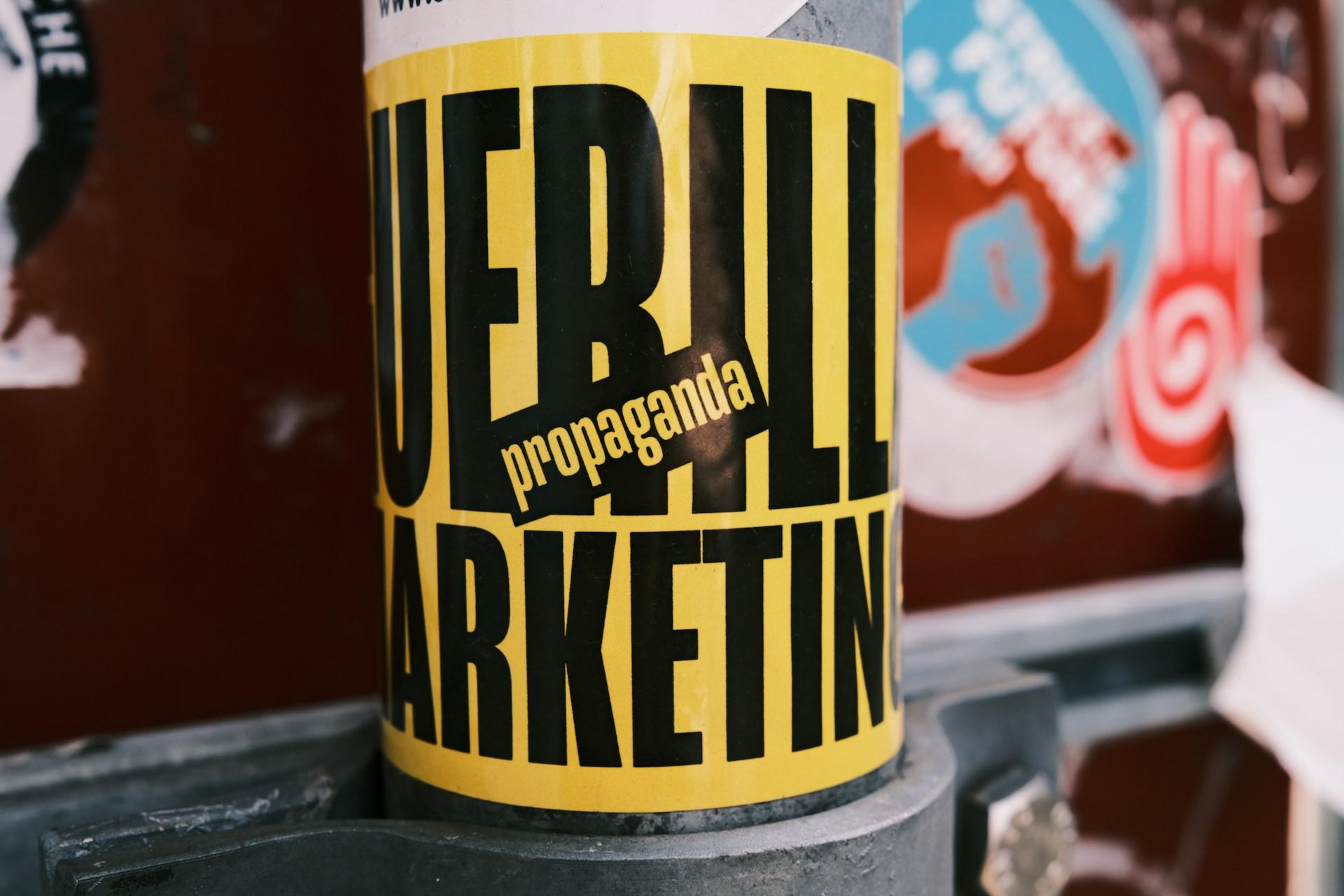
Guerilla marketing is still relevant today, but it has changed. It is no longer a reliable shortcut to instant virality. It works best when it is treated as a strategic way to earn disproportionate attention and convert that attention into real business outcomes. In a world where everyone is constantly producing content and competing for eyeballs, the average “clever stunt” is easy to ignore. The campaigns that still succeed are the ones built with clear messaging, thoughtful distribution, and a plan to turn curiosity into action.
The reason guerilla marketing continues to matter is simple. Paid advertising has become more crowded and more expensive, and organic reach is harder to sustain when algorithms reward volume and consistency. Small teams often cannot compete purely through ad spend or content scale. Guerilla marketing offers leverage because it relies on creativity, timing, and insight rather than budget alone. However, the same environment that makes guerilla marketing attractive also makes it riskier. Public backlash can travel faster than praise, and a cultural misstep can damage a brand far more than a small campaign budget ever could. In regions like Malaysia, Singapore, or KSA, the cost of being misunderstood can be high, which means the work demands cultural sensitivity and brand discipline.
To understand whether guerilla marketing is truly relevant, it helps to redefine what it is. It is not only street posters, flash mobs, or physical activations. Guerilla marketing is any high creativity, low cost move that interrupts normal patterns and earns attention that would otherwise require a large budget. It can happen offline or online. The channel is not what makes it guerilla. The leverage does. A well designed guerilla idea creates a moment people want to share because it feels surprising, relatable, or emotionally resonant. Yet attention alone is never the goal. Attention without conversion is just noise.
This is why modern guerilla marketing succeeds only when it is built around three outcomes: clarity, capture, and continuity. Clarity means the audience can quickly understand what the business offers and why it matters. Many campaigns fail because people remember the joke, not the product. If the message is not instantly graspable, the activation becomes entertainment rather than marketing. Capture means the campaign includes a simple path for the audience to take the next step immediately, such as scanning a QR code to reach a strong landing page, joining a waitlist, signing up for a trial, or visiting a store. Without capture, founders rely on people remembering them later, which rarely happens. Continuity means planning what comes after the spike. A momentary burst of attention must connect to the wider growth system, such as follow up content, an offer sequence, partner amplification, or sales outreach. Without continuity, a campaign becomes a one day spectacle rather than a growth lever.
There are clear situations where guerilla marketing remains highly relevant. It works well when the product is simple to understand and naturally shareable, such as food and beverage, beauty, consumer services, community driven events, or tools with a clear pain point. It is also effective when entering markets where competitors look predictable and repetitive. A smart guerilla concept can signal distinctiveness faster than a long ad campaign. It can also be valuable for early stage brands that need proof of demand more than scale. A small activation can reveal which messages make people stop, which offers drive action, and what kind of brand voice actually resonates in real life.
At the same time, guerilla marketing is not always the right move. It does not compensate for a weak offer, confusing positioning, or a product experience that disappoints. In fact, it can amplify problems by bringing more people to a broken funnel. It can also hurt brands that are not operationally ready for attention. If a campaign drives spikes in orders, inquiries, or sign ups and the team cannot fulfill, respond, or support customers properly, the result is lost trust and negative reviews. Guerilla marketing is also a poor choice when the motivation is ego rather than strategy. Campaigns built for applause tend to optimize for shock, not alignment, and they often confuse visibility with progress.
In the end, guerilla marketing is still relevant, but it is no longer a simple “hack.” It is a discipline that demands message precision, operational readiness, and cultural awareness. The most effective founders approach it like a product decision rather than a performance. They start with a clear insight, design an activation that communicates value quickly, build a frictionless path to capture interest, and create a continuity plan that turns a spike into sustained growth. When done this way, guerilla marketing does not just remain relevant. It becomes one of the few strategies that can still help a small team outperform a bigger budget.
 WhatsApp
 Instagram
 Threads
-3.jpg&w=3840&q=75)