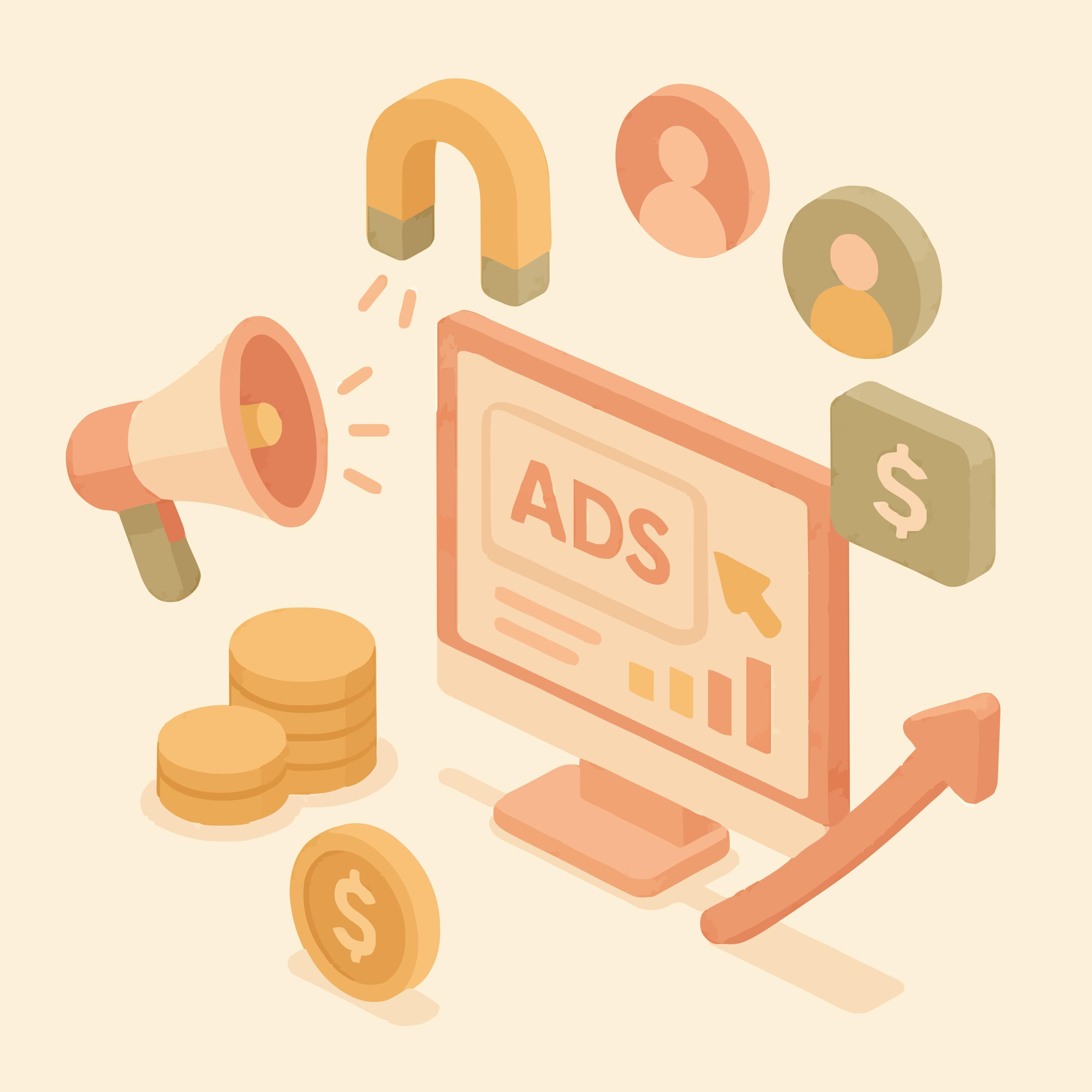
Authority marketing often looks like a simple game of visibility. Post more, show up on podcasts, share a few wins, and wait for the market to recognise you. In practice, it rarely works that way. Many founders publish consistently yet still feel like strangers when it comes time to sell. Their content gets attention, but not commitment. The reason is that authority is not a mood or a personal branding aesthetic. It is a system that reduces perceived risk for buyers, shortens the distance between interest and action, and compounds trust over time. To leverage authority marketing, you have to treat it like an engine with clear inputs, a defined audience, and a conversion path that turns credibility into demand.
The purpose of authority marketing is not to educate everyone. It is to make the right people feel safer choosing you. Buyers are always making a bet. They are betting that you can deliver outcomes, manage complexity, and solve the problem they cannot solve alone. When they do not trust you yet, they protect themselves by asking for more proof, more meetings, more references, and more concessions on price. Authority reduces that friction. It makes your expertise easier to believe and your offer easier to justify. When authority is present, conversations start with confidence instead of doubt. Prospects arrive already familiar with your thinking, and the sales process becomes a continuation rather than an interrogation.
Authority begins with a clear claim. You cannot build authority by being broadly helpful or offering advice that applies to every business. People do not remember generalists. They remember specialists who consistently solve a recognisable problem. The simplest test is whether your audience can describe you in one sentence. If they cannot finish the phrase “This person is for X,” then your messaging is too wide, and your content will feel scattered no matter how often you publish. A focused wedge creates an association in the market. It tells people what you do, who you do it for, and what kind of transformation you deliver. That association becomes the foundation that lets your credibility grow.
Once the wedge is clear, you need a point of view that is distinct enough to feel like judgment. Many founders recycle familiar advice because it feels safe, but safety often sounds like sameness. Authority requires a stance that affects decisions. A point of view is not a catchy line. It is an explanation of why things work the way they do, where common thinking fails, and what you do differently as a result. The fastest path to a strong point of view is to identify the default belief in your category, show where it breaks in real execution, and then replace it with a rule you actually follow. This creates content that does more than inform. It signals competence because it reflects how you think under pressure.
However, perspective alone does not create authority. Proof is what turns smart ideas into trust that converts. Proof is not a vague statement about helping clients grow. Proof is specific outcomes, repeatable methods, credible processes, and results that can be explained clearly. When you share proof, you move from sounding knowledgeable to being believable. Buyers trust specificity because it implies you understand details, trade-offs, and constraints. In authority marketing, proof acts like a bridge between your point of view and your promise. It makes your claims safer to accept.
Even if you are early in your journey, you can build proof without exaggeration. You can document improvements you made to your own funnel and show the numbers. You can run a pilot project with measurable goals and publish what happened. You can share a teardown that demonstrates how you diagnose problems and what you prioritise. Authority does not require you to be the biggest name in the industry. It requires you to be precise, consistent, and honest about what you can back up.
The next step is turning your wedge, point of view, and proof into assets that work repeatedly. This is where most people waste effort. They produce endless new posts but fail to create anything that continues to sell for them. A strong authority strategy relies on a small set of trust assets. These are pieces of content or collateral designed to close the gap between interest and action. They are not made to entertain the algorithm. They are made to answer the buyer’s unspoken question, which is whether you can be trusted with the job.
Trust assets can take several forms. They might be a flagship narrative that clearly explains your method and why it works. They might be a signature framework that makes your approach feel structured and repeatable. They might be a proof library made up of case studies, before-and-after breakdowns, and results that demonstrate outcomes across different contexts. The point is not to create many assets. The point is to create a few that are strong enough to distribute repeatedly until the market starts to remember you for them.
Distribution is the stage where authority either compounds or stalls. Many founders rely on a single platform and assume consistency alone will do the job. But when you are dependent on one channel, you are renting attention. Your reach can rise and fall based on forces you do not control. To leverage authority properly, you need both owned channels and borrowed channels. Owned channels are the places you control, such as your email list, website, or community. Borrowed channels are places where other people lend you their audience and credibility, such as podcasts, newsletters, events, and partnerships. Borrowed channels expand reach quickly, but owned channels turn reach into relationships.
A practical authority loop is simple. You create one high-signal trust asset. You distribute it through borrowed trust. You capture the right audience into an owned channel. Then you convert attention into action through an offer that matches the intent your content created. This is where many authority efforts fail. Content builds interest, but the next step is unclear or mismatched. If your content is about diagnosing churn, your next step should not be a generic “book a call.” It should be something aligned, such as a churn diagnostic, a teardown, a template, or a benchmark. When the content and the call to action match, the audience experiences momentum rather than confusion.
Conversion also improves when the offer is easy to start. Authority can reduce resistance, but it cannot compensate for a confusing or high-risk first step. If the only way to work with you is through a large custom engagement, the buyer still feels like they are stepping off a cliff. One way to reduce that fear is to productise the entry point. A paid audit, a workshop, a sprint, or a fixed-scope engagement can create a lower-risk first yes that leads naturally into deeper work. This is not about discounting your value. It is about making it easier for trust to become commitment.
Many founders assume authority marketing requires being everywhere. That belief usually leads to burnout and diluted messaging. Authority is built through consistency of signal, not sheer volume across platforms. It is better to choose two channels where your audience actually pays attention and commit to them deeply. You can still reach other platforms through repurposing, but the repurposing should be structural rather than lazy. A strong essay can become a talk, a podcast outline, a series of short posts, a webinar, and a sales document, all while carrying the same core message. This approach builds familiarity. Familiarity builds trust. Trust builds authority.
Borrowed trust works best when it is targeted. Random guest appearances may create activity, but they rarely create authority. The right appearances put your ideas in front of people who already care about your wedge and already trust the host. One well-placed conversation can outperform many generic ones. When you show up, the goal is not to sound impressive. The goal is to be useful in a way that reveals judgment. Avoid broad advice. Make the invisible visible. Share the metrics most people miss, the trade-offs most people ignore, and the decision rules you actually use. That is what people remember and repeat.
Measuring authority requires discipline because surface metrics are seductive. Likes and views can be signals of resonance, but they are not proof that your authority is converting. The more meaningful outcomes show up in deal flow and relationship momentum. You will notice authority working when prospects reference your ideas without you prompting them. You will hear your language repeated back to you. You will see intros happen more easily. You will feel sales cycles compress because the buyer arrives already convinced of your competence. These are not vague feelings. They are practical indicators that trust is doing work for you.
If you want clearer leading indicators, focus on how many people move from public content into an owned channel, how often your content creates qualified conversations, and how frequently your content is mentioned in sales discussions. Those signals show whether authority is functioning as a business asset rather than a content hobby. There are also common mistakes that undermine authority. One is outsourcing your voice too early. You can get help with editing and packaging, but if someone else writes your thinking, the authority will not feel real. Authority is trust in judgment, and judgment has a texture that is difficult to fake. Another mistake is avoiding clarity because it feels risky. Being clear creates edges, and edges create distinctiveness. If your content could be written by anyone, it will not be remembered. A final mistake is letting marketing outrun delivery. Authority raises expectations, and if outcomes do not match the promise, credibility becomes fragile. Your authority marketing must be anchored to real operational excellence.
When the system is built correctly, authority becomes a compounding advantage. It lowers customer acquisition cost because your content pre-sells. It strengthens retention because clients understand your method and know what to expect. It improves pricing power because trust reduces negotiation pressure. It attracts partners and talent because people prefer to align with leaders who appear credible and consistent. Over time, authority stops being a promotional tactic and becomes a defensible moat.
Leveraging authority marketing, then, is about shifting from random visibility to deliberate credibility. You choose a clear wedge so the market knows what you stand for. You build a point of view that demonstrates judgment. You support it with proof that makes your claims believable. You package it into trust assets that can be distributed repeatedly. You use borrowed channels to reach the right audiences, and owned channels to deepen relationships. You match your content to a clear, low-friction offer so trust can become action. When you repeat this loop with consistency, authority stops being something you hope for and becomes something you build.
 WhatsApp
 Instagram
 Threads