Team performance is often treated like a technical problem. If output drops, the instinct is to blame workload, skill gaps, or messy processes. Yet many teams do not slow down because the work becomes impossible. They slow down because the social rules of working together shift in subtle ways. Those rules are shaped daily by colleagues, not by policy documents. A single person’s habits, tone, and decision style can change how safe it feels to take ownership, speak honestly, and move fast. When that safety erodes, productivity suffers even when everyone is trying.
Most work in a modern team is not completed in isolation. It is completed through handoffs. One person drafts, another reviews, a third approves, and someone else delivers. When handoffs are clean, trust becomes an invisible accelerator. People can act without checking every detail because they believe their teammates will keep promises, share context, and correct mistakes without blame. When handoffs become unreliable, the opposite happens. Work slows down because people start building personal safety nets. They double-check more than necessary, ask for written confirmation, over-explain, and delay decisions until they feel protected. That extra friction is rarely captured in metrics, but it is where performance quietly leaks away.
One of the most common ways a colleague disrupts team performance is by weakening ownership. This can happen even when the colleague thinks they are being helpful. Imagine someone who “improves” other people’s work without telling them. They rewrite a deck the night before a presentation, change a proposal and send it out, or push a fix without leaving notes. In the short term, the output might look polished. Over time, it teaches everyone that ownership is conditional. If your work can be altered silently, your responsibility becomes unclear. You are accountable for outcomes but not fully in control of what gets shipped. Strong contributors notice this quickly. They do not necessarily complain. Instead, they stop taking initiative. They become cautious, because initiative now carries a hidden risk: your effort may be overridden without conversation, and you may still be blamed if something goes wrong. The team becomes slower, not because people care less, but because confidence in clean ownership has been damaged.
The reverse dynamic can be equally harmful: a colleague who hoards context. They may not be loud or openly difficult. They might even appear dependable because they always have the answer. But if one person becomes the gatekeeper of information, the team’s speed collapses around them. Decisions take longer because everyone must consult the same source. Small tasks turn into meetings because clarity is missing. People hesitate to act because acting without context feels unsafe. Eventually the leader gets dragged into details that should have been handled by the team, not due to micromanagement, but because the team cannot function without access to the full picture. In that environment, performance does not fail dramatically. It decays through delays, rework, and constant bottlenecks.
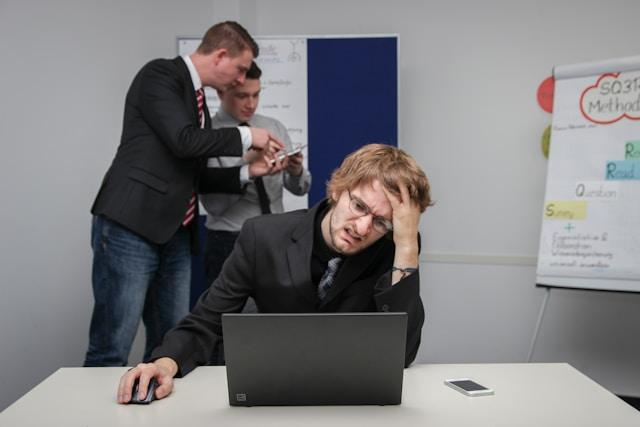
A different pattern appears when a colleague shapes the emotional climate through negativity or undermining behavior. Some people do not attack directly. They roll their eyes, sigh, make side comments, or correct others in ways that embarrass them. Others keep their frustration private, venting in side chats and building informal narratives about who is competent, who is trusted, and who is “the problem.” The impact is structural. Once a team has two versions of reality, one in public and one in private, alignment stops being stable. People start filtering what they say in meetings. Risk is raised late, if at all, because raising it feels socially dangerous. Decisions get revisited because the commitment made in public was never truly shared. The team remains busy, but much of that busyness is spent managing relationships, decoding signals, and avoiding conflict instead of solving problems.
Even behaviors that seem positive can damage performance when they are not grounded in reality. A colleague who says yes to everything can be celebrated as energetic and reliable. They volunteer the team for extra tasks, make confident commitments in front of clients, and promise timelines without checking capacity. That confidence looks like leadership, but it creates operational debt. The team pays that debt through late nights, rushed quality, and avoidable mistakes. Emergency mode becomes normal. At first, emergency mode feels like hustle. Eventually, it becomes a slow drain on judgment, creativity, and retention. When the team is always reacting, nobody has enough mental space to prevent problems upstream.
All of these behaviors share a single consequence: they raise the emotional tax of working together. Emotional tax is the extra mental load people carry when they have to protect themselves, interpret hidden messages, and manage uncertainty about how work will be treated. When emotional tax is low, the team’s attention stays on the work. People share concerns early, ask questions, and admit when something is unclear. When emotional tax is high, attention shifts inward. People become cautious. They delay updates until they are more defensible. They soften their language, add disclaimers, and avoid disagreement. This shift is easy to miss because it can look like politeness or harmony. In reality, it is often a sign that the team has learned silence is safer than honesty.
That is why performance issues often show up indirectly. Leaders may see missed deadlines, uneven quality, or slower turnaround times and assume the solution is better tools, tighter tracking, or more meetings. But if the root cause is behavioral, those fixes can backfire. More meetings create more chances for undermining behavior. More tracking can increase fear, making people even more defensive. Processes do not fix trust. They only expose whether trust exists.
The most painful moment for many leaders comes when a strong team member disengages or leaves. The departure is rarely framed as conflict with a colleague. Instead, the explanation sounds like fatigue. “I’m tired.” “I don’t feel like my work matters.” “I’m always defending what I do.” Those phrases often mean the workplace has become emotionally expensive. When that happens, performance declines in a way that is hard to reverse, because the people you most need for stability are often the first to withdraw. If this is true, then the response cannot be to treat behavior as a soft topic that belongs in private conversations only when things explode. Behavior is an execution issue. It shapes speed, clarity, and quality. Leaders need a way to address it without turning the workplace into a drama cycle. The key is to focus on observable patterns and their outcomes, not on personalities and intentions.
A useful lens is to ask whether a colleague’s actions increase clarity or increase uncertainty. Clarity means everyone knows who owns what, how decisions are made, and what good looks like. Uncertainty means people guess, hesitate, and compensate through unnecessary checks. When someone edits deliverables without telling the owner, uncertainty rises and accountability blurs. When someone hoards context, uncertainty rises and bottlenecks form. When someone makes promises without checking capacity, uncertainty rises and the team ends up firefighting. When someone undermines others, uncertainty rises and people stop speaking up. These are not moral judgments. They are operational facts.
Once the behavior is identified, leaders can name it in a way that connects directly to team performance. The language matters. It should be specific enough to be undeniable, and practical enough to be actionable. The conversation becomes less about who someone is and more about what the team can rely on. That shift reduces defensiveness and gives the team a shared standard. After that, high-performing teams benefit from a small number of clear working norms that protect ownership and reduce confusion. These norms are not meant to control people. They are meant to remove friction so the team can focus on delivery. When ownership is respected, people work with confidence. When information flows freely, decisions speed up. When commitments reflect real capacity, quality stabilizes. When disagreement can happen without humiliation, the team becomes smarter because risks surface early. A team does not need endless rules to achieve this. It needs a few standards that are consistent and enforced.
Leaders can also surface hidden friction by asking questions that point to workflow pain rather than blaming individuals. Where do we lose the most time because ownership is unclear? Where do we redo work because expectations shift late? Where do we hesitate to speak up because the response feels risky? When patterns repeat in answers, the issue becomes visible and solvable. Often, those patterns trace back to one colleague’s repeated actions, not because that person is uniquely bad, but because their behavior has been allowed to set the tone.
Ultimately, a colleague’s actions affect team performance because they shape what people believe is safe. Safe to take responsibility. Safe to ask for clarification. Safe to disagree. Safe to admit uncertainty before it becomes a costly mistake. When that kind of safety exists, teams move faster and make better decisions, even under pressure. When it does not, teams slow down, drift into cautious habits, and spend their best energy managing social risk instead of building. The uncomfortable truth is that culture is taught by what a team tolerates. If harmful behavior is ignored, the team learns that it is normal and it adapts accordingly. If behavior is addressed with clarity and consistency, the team learns a different lesson: good work is protected here, and people do not have to sacrifice dignity to deliver results. That lesson is not sentimental. It is operational. It is what keeps a team sharp long after motivation fades and real pressure arrives.
 WhatsApp
 Instagram
 Threads