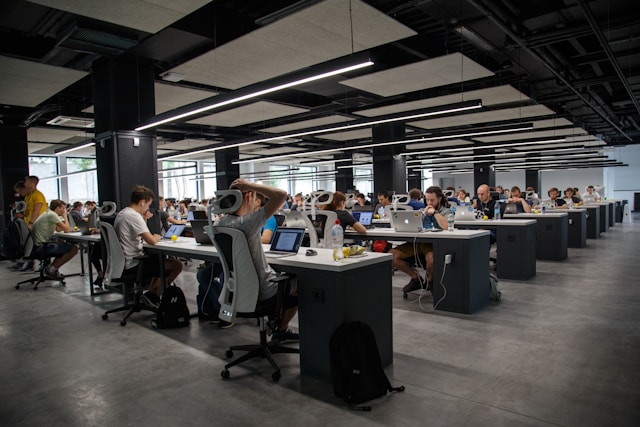
Work culture in Malaysia is changing because the old unwritten deal between employers and employees no longer fits the way people live and work today. For decades, many workplaces ran on a familiar script. Employees were expected to be loyal, to work hard without asking too many questions, and to accept that long hours were part of proving commitment. In return, employers offered stability, a clear chain of command, and the sense that staying put would eventually be rewarded. That arrangement was never perfect, but it was predictable. People knew what good behaviour looked like, managers knew what to praise, and teams often tolerated inefficiencies because the trade off was security.
That predictability has weakened. The shift is not happening because Malaysians suddenly stopped valuing respect or stability. It is happening because the conditions surrounding work have changed faster than workplace norms could keep up. When the environment changes, culture either adapts or becomes a drag on performance. Many founders and managers only notice the drag when hiring becomes harder, resignations increase, and people who used to go the extra mile start doing the bare minimum while still appearing polite and cooperative.
One major force behind the change is the normalisation of flexibility. What used to be framed as a special privilege has become a baseline expectation for many workers, especially those in roles that can be done outside a fixed office setting. This shift accelerated when employees experienced different working arrangements and realised how much time and energy they were spending on commuting, rigid schedules, and unnecessary face time. Once someone has lived a different reality, it is difficult to return to the old one without feeling the loss. Flexibility is no longer only about convenience. It has become closely linked to autonomy, trust, and quality of life.
Malaysia has also moved in the direction of recognising flexible work in a more formal way. When the law and official guidance begin to accommodate flexible working arrangements, it signals that the country accepts that one standard mould of working hours and location does not fit everyone. Even when employers retain the right to decide what works for their business, the existence of a process and expectations around how requests are handled shifts the psychological balance. The conversation changes from “Are we generous enough to allow this?” to “How do we design work so it can function under modern expectations?”
Cost pressure is another powerful driver of cultural change because it changes how people think about fairness. When living costs rise, employees become more sensitive to how their time is used. Tasks that once felt mildly annoying start to feel insulting when wages are tight and days are stretched thin. A long meeting with no outcome feels like an employer taking something irreplaceable. Working late feels less like ambition and more like being taken for granted. Even in companies that pay above the minimum wage, changes to wage floors and broader economic conditions influence how workers evaluate what they are willing to accept. People talk to friends, compare experiences across industries, and do the mental arithmetic of effort versus reward.
This is why the old startup story of “we cannot pay as much, but you will learn more here” is harder to sell unless the learning is real and the workload is genuinely purposeful. Malaysians still care about growth and opportunity, but the tolerance for messy systems, chaotic priorities, and permanent urgency is lower than before. Employees want to feel that extra effort is recognised, that sacrifice is temporary and meaningful, and that boundaries are not treated as a lack of commitment. In many teams, the new idea of professionalism includes not only working hard, but also working in a way that is sustainable and respectful.
Hybrid work has added another layer to the change because it forces companies to clarify what their culture truly depends on. In fully office based environments, culture can hide inside proximity. Leaders can mistake visibility for alignment and noise for collaboration. People can feel connected simply because they occupy the same space. Hybrid work removes those shortcuts. When teams are not always together physically, it becomes obvious whether expectations are clear, whether communication is intentional, and whether performance is measured by outcomes rather than presence.
For employers, hybrid work is often treated as a policy. For employees, hybrid work is experienced as trust. That difference matters. When managers insist on attendance because they do not know how to evaluate work properly, employees interpret it as insecurity and control rather than leadership. When employees struggle in hybrid settings because no one defined priorities, timelines, and accountability, managers may interpret it as entitlement rather than a design failure. Hybrid does not destroy culture on its own. It exposes the weak parts of culture that were previously masked by physical togetherness.
At the same time, competition for talent has intensified, and that increases the power of employee choice. When skilled people have options, culture becomes a real business factor rather than a nice extra. In many sectors, companies in Malaysia are dealing with skills shortages, retention challenges, and a job market where workers are more informed and more willing to move. Employees do not leave only for higher pay. They leave for clarity, dignity, and growth. They leave when career progression feels vague, when feedback is inconsistent, and when the workplace relies on personal relationships more than fair systems. They leave when the emotional cost of staying becomes higher than the risk of trying somewhere new.
This is also where generational differences show up, although the truth is more nuanced than common stereotypes. It is easy to blame culture shifts on younger workers being less resilient or older workers being too rigid. The real difference is that people are shaped by the economic realities of their time. Those who came of age in periods where long tenure was common may associate loyalty with security and interpret boundaries as a lack of drive. Those who grew up watching layoffs, rising costs, and uncertainty may see loyalty as risky and view boundaries as self protection. When these perspectives meet inside one organisation, misunderstandings can build quickly, especially if managers rely on assumptions instead of explicit expectations.
This is why conversations about wellbeing and burnout are becoming more common in Malaysian workplaces. Again, this is not merely about comfort or trends. It is about performance over time. In the short term, many companies can run on adrenaline, especially startups that reward speed and sacrifice. Burnout often looks like dedication at first. People stay late, take on extra work, and become the hero who saves deadlines. Over time, the same pattern leads to errors, shallow thinking, strained relationships, and quiet resentment. A culture that depends on constant overwork is an extraction model, even if it is wrapped in motivational language. Eventually, employees will respond by disengaging, leaving, or refusing to go beyond the job description.
Global competition is also reshaping expectations in Malaysia. More Malaysians now compare their work norms with what they see in Singapore, Australia, the UK, and remote first companies that hire across borders. They are exposed to different standards around flexible work, parental support, mental health benefits, and transparent progression. Not all foreign practices are automatically better, but exposure changes what people believe is possible. Employers who want to attract strong talent cannot rely only on national norms anymore because employees are benchmarking against a wider world.
Policy signals around workforce development and labour market direction also influence culture, even indirectly. When a country pushes toward higher value roles and tighter standards for certain categories of employment, businesses receive a message about competitiveness. Competing on the quality of work rather than the quantity of labour requires stronger management practices. It requires better goal setting, better decision making, and better people development. As these expectations rise, it becomes harder for companies to maintain cultures built on vague loyalty and unspoken rules.
All of these forces lead to the same conclusion. Work culture in Malaysia is shifting away from being sustained by personality and proximity, and toward being sustained by infrastructure. In the past, founders and leaders could carry culture personally. They could motivate in the room, smooth conflict through one to one persuasion, and keep morale stable through charisma. That approach breaks down as teams grow, as hybrid work spreads, and as employee expectations become sharper. When the organisation becomes more complex, culture must be carried by systems, not just by the founder’s presence.
The culture Malaysians are increasingly asking for is not an easy culture. It is a clearer culture. People want to know what good performance looks like, how feedback is given, and how promotions happen. They want to know whether workload is managed intentionally or whether it will always expand until it breaks someone. They want managers who can set priorities, not just pass down tasks. They want meetings that have a purpose, communication that respects time, and flexibility that is not punished through informal judgement. They want to feel that the rules are consistent, not dependent on who is watching or who is favoured.
In practical terms, this means Malaysian workplaces are moving from identity based culture to operating system culture. Identity based culture relies on shared feelings and shared presence. It can feel warm, but it is fragile under pressure. Operating system culture relies on clear norms, reliable processes, and leadership behaviours that scale. It can still be human and relational, but it is less dependent on luck. It makes it easier for employees to trust the organisation because they are not forced to interpret hidden signals every day.
This evolution does not mean Malaysia is abandoning its values of respect, harmony, and community. It means those values are being expressed differently. Harmony today cannot mean silence when something is wrong. Respect today cannot mean accepting overload without question. Loyalty today cannot mean staying in a workplace that offers no growth or fairness. As work becomes more demanding and more complex, values need stronger structures to survive.
For founders and managers, the most useful mindset shift is to stop asking how to preserve the old culture and start asking what must be true for good people to stay, grow, and do great work. That question forces honesty. It forces leaders to look at workload design, feedback loops, compensation philosophy, and trust. It encourages them to create a culture where performance is measurable, development is real, and boundaries are not treated as disloyalty. Work culture in Malaysia is changing because Malaysians are changing how they define a good life, a fair workplace, and meaningful work. The companies that adapt will not only retain talent. They will build teams that can perform under modern pressure without burning out, and that is the kind of advantage that lasts.
 WhatsApp
 Instagram
 Threads