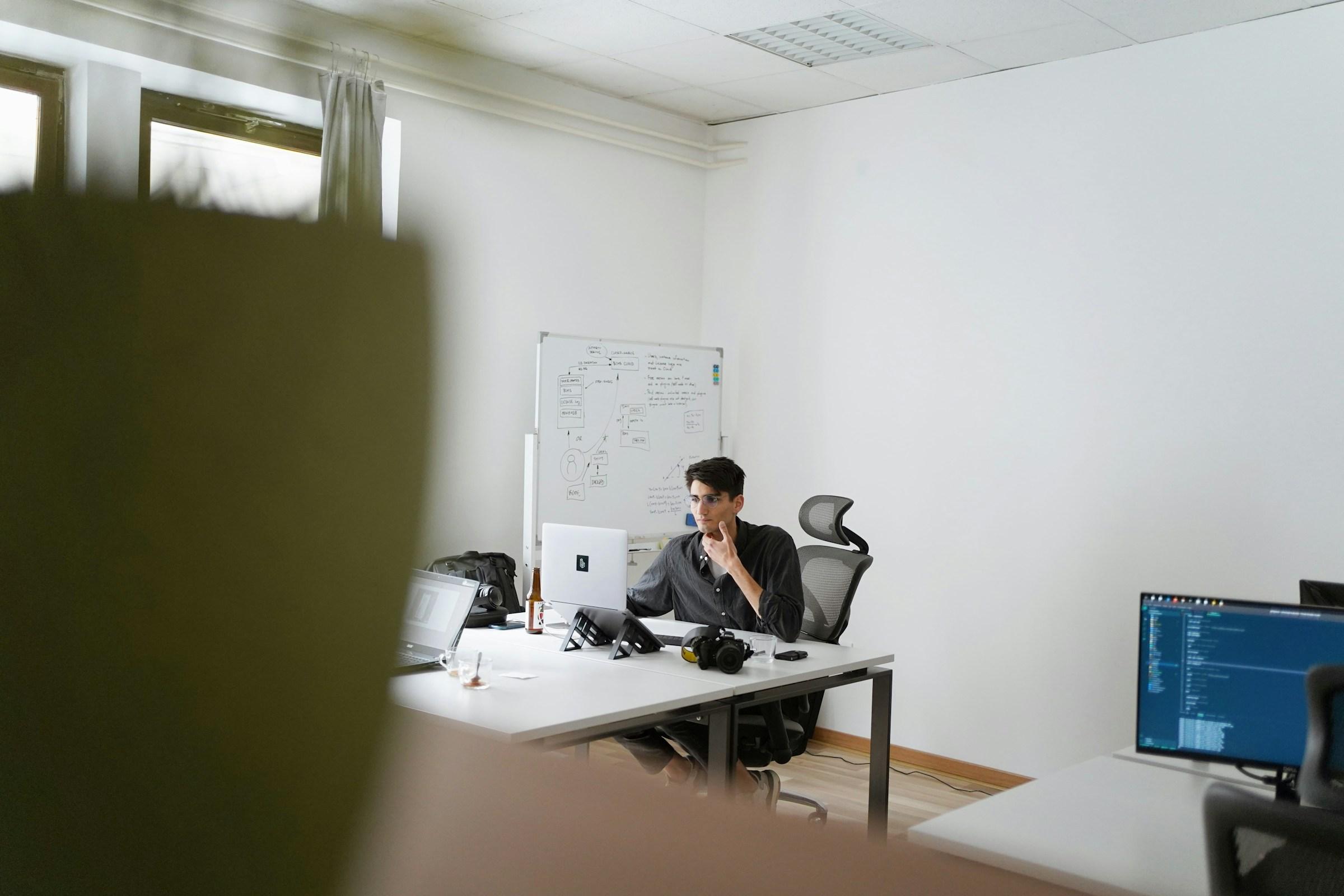
The argument about where work happens is rarely about geography. It is about whether a company believes good work comes from trust and clarity, or from supervision and visibility. When employees ask for more flexibility in where they work, most of them are not asking to disappear. They are asking for a working life that does not require them to surrender their time, energy, and personal responsibilities just to prove they are committed. For decades, the office was treated as the default container for productivity. If you were serious, you showed up. If you wanted to be seen as dependable, you were present. But the last few years cracked that assumption. People experienced, sometimes for the first time, that they could deliver outcomes without spending hours commuting or organizing their day around a physical location. Once someone sees that a different model is possible, it is hard to accept a rule that feels like a step backward, especially when the rule does not clearly improve the work itself.
One major reason employees want flexibility is that traditional office routines come with hidden costs that rarely show up in a job description. The commute is the obvious one. Time spent in traffic or on crowded public transport is not neutral time. It is time that drains attention before the workday even begins, then steals recovery time at the end of the day. In places where congestion is part of daily life, this can easily mean two to three hours that vanish without any return. Add the direct financial cost, such as fuel, tolls, parking, or transit fares, and employees start doing the math. If a salary increase is swallowed by the cost of showing up, it stops feeling like progress. Flexibility, on the other hand, returns something that money struggles to buy, which is usable time.
That time matters because life has not paused to accommodate office culture. Caregiving is now a central reality for a lot of working adults, whether they are caring for children, aging parents, or extended family. Many people are also managing the administrative weight of modern life, from medical appointments to school schedules to basic household logistics. When a workplace insists on rigid location requirements, employees do not experience it as a neutral policy. They experience it as a demand that their personal responsibilities should be pushed aside or solved at personal expense. Flexibility becomes a way to keep life functioning without constant stress and guilt.
There is also a psychological layer that leaders underestimate. Flexibility has become a proxy for trust. When a manager insists that employees must be physically present to be productive, the underlying message can sound like this: I do not believe you will work unless I can see you. Even if leaders do not intend to communicate distrust, employees often feel it that way. Trust is not built through surveillance. It is built through shared expectations, clear accountability, and consistent follow through. When employees ask for flexibility, many are really asking for their employer to treat them like capable adults who can manage their time and still meet commitments.
This matters even more in knowledge work, where the outputs are not always visible hour by hour. A designer, analyst, engineer, or strategist might do their best thinking in focused blocks, not in a continuous stream of activity. Offices are not always designed for deep work. Open plans can be noisy. Meetings can fragment the day into tiny pieces. Social pressure can push people to look available instead of being effective. In those environments, employees can feel like office days reduce their productivity rather than enhance it. They may find themselves doing the visible work during office hours, responding quickly, attending meetings, signaling presence, then doing the real work later at night when they finally have quiet. Flexibility allows them to choose environments that support concentration and better quality output.
At the same time, employees are not necessarily rejecting the office as a place. Many people still value the social energy, spontaneous conversations, and sense of belonging that can happen in person. What they resist is being forced into a one size fits all schedule that ignores individual constraints and working styles. The modern workforce is more diverse in life stage and responsibilities than many office policies admit. A single rigid rule can land very differently on a young employee who lives near the office, compared to a working parent coordinating childcare, or someone supporting an ill family member, or an employee with health needs that make commuting exhausting. When leaders frame flexibility as a perk for a privileged few, they miss the point. For many, it is a requirement to function sustainably.
Another reason flexibility is in demand is that work itself has expanded. Digital tools make it easier to reach people outside office hours, and many employees feel that boundaries have eroded. Messages arrive late at night, on weekends, during family time. Some employees can manage that with strong personal boundaries, but others feel pressure to stay responsive to prove dedication. When your time is already being pulled in multiple directions, the ability to choose where you work becomes a way to regain a sense of control. It allows employees to align their workday with their energy, to take a midday break when needed, to handle a personal matter without feeling like they are committing a violation. In other words, flexibility helps people stay employed without feeling consumed.
Flexibility is also shaped by a shifting labor market. Employees are now more aware that alternatives exist. Some companies compete aggressively on flexibility because it is cheaper than raising salaries across the board, and because it widens the talent pool. Once flexibility becomes a common offering, it turns into a baseline expectation, especially among workers who have experienced it. If an employee can get similar pay and better autonomy elsewhere, location rigidity becomes a reason to leave. This is why many leaders experience flexibility demands as a retention problem. The employees are not threatening the company. They are simply responding to the market and to their own needs.
For founders and managers, the most uncomfortable truth is that location policies often become a substitute for management quality. When a team struggles with performance, leaders can be tempted to blame distance. When collaboration feels messy, leaders may conclude that physical presence will fix it. But physical proximity does not automatically create clarity. If goals are vague, if ownership is unclear, if priorities change without explanation, if meetings are poorly run, then forcing people into the same building will not solve the underlying issues. It can even make them worse by adding more friction to already fragile working relationships.
What employees want, at its core, is a model that measures them by outcomes rather than attendance. Many people are willing to be accountable. They are willing to communicate. They are willing to coordinate schedules for real collaboration. What they do not want is a system that treats location as a moral signal. They do not want their value judged by whether their laptop is open in the office. They want a workplace that can articulate what good performance looks like, then allow them to choose the conditions that help them deliver it.
This is where the conversation often breaks down, because leaders and employees are talking about different fears. Employees fear being punished for not being seen. They worry about being overlooked for opportunities, excluded from decisions, or labeled as less committed. Managers fear losing control. They worry that work will slip, that communication will fragment, that culture will weaken. Both fears are valid. But neither fear is solved by making a blanket rule and hoping it works.
The real solution requires better design. A flexible working model works when a company has clear expectations about deliverables, timelines, and communication. When employees know what they own and what success means, flexibility becomes less risky for leaders and less stressful for employees. It also works when the team is honest about which work truly benefits from being done in person. Not everything does. But some moments do. Onboarding, mentorship, high stakes planning, conflict resolution, creative workshops, and relationship building can be stronger face to face. Flexibility does not mean eliminating the office. It means using the office with intention.
Fairness is another key reason employees push for flexibility. People can accept constraints when they feel the trade is honest. If a role requires physical presence because the work is hands on, most employees understand that. What they struggle with is inconsistency, where policies feel arbitrary or where some employees have autonomy while others are micromanaged without explanation. In flexible models, companies have to communicate clearly, apply rules consistently, and find ways to support employees whose roles cannot be remote by offering other forms of control over their time, such as predictable shifts or better scheduling autonomy.
The bigger story is that flexibility has become tied to dignity. When employees ask for flexibility, they are asking to be treated as whole people, not just as units of labor. They are asking for a work structure that acknowledges the reality of modern life, the rising cost of time, the mental load of constant availability, and the fact that productivity is not the same as presence. For many, the office is no longer the obvious best place to work. It is simply one place among several, and not always the most effective.
Founders who respond well to this shift tend to stop treating flexibility as a negotiation and start treating it as an operating system. They define what must be synchronized and what can be asynchronous. They clarify ownership so that work does not depend on constant supervision. They build communication rhythms that reduce anxiety instead of multiplying meetings. They improve in person time by making it purposeful, not performative. They measure output, not hours, and they invest in managers who can coach and coordinate, rather than control.
Employees want flexibility in where they work because they are optimizing for sustainability. They want to do good work without burning out. They want to contribute without sacrificing their family life or mental health. They want autonomy because autonomy supports responsibility, not because responsibility disappears without an office. When leaders understand that, flexibility stops being a threat to culture. It becomes a lever for retention, productivity, and trust. The question is no longer whether flexibility is a trend. The question is what kind of company you are building. One that insists people prove they are working, or one that makes it possible for people to work well.
 WhatsApp
 Instagram
 Threads