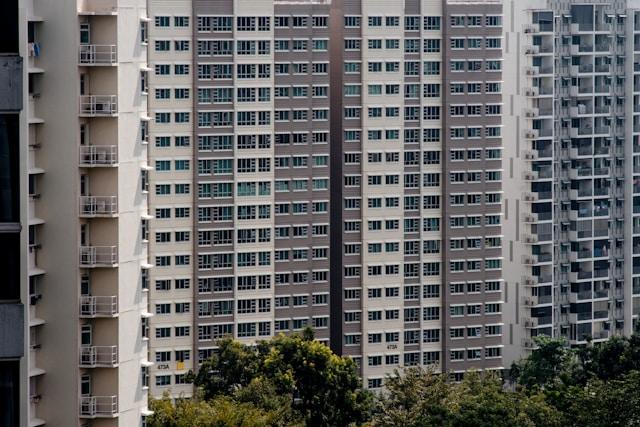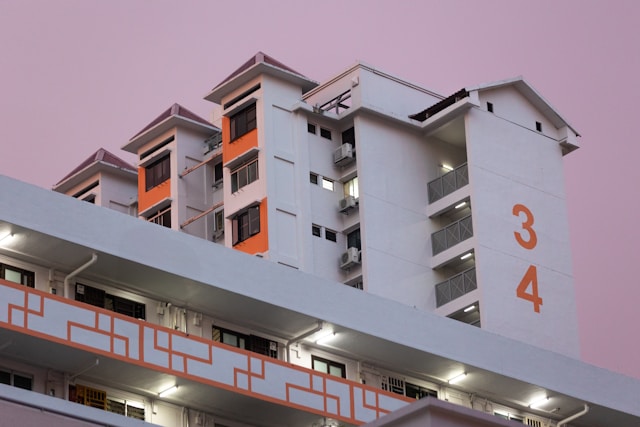
HDB flats tend to be more affordable than private housing in Singapore because they are not priced and distributed like a typical market asset. The affordability difference is not simply a matter of cheaper materials, smaller unit sizes, or less luxurious facilities. It comes from a system that is intentionally built to keep entry prices within reach for a broad segment of residents, then reinforced with financing rules and ownership conditions that limit speculation. Private housing, by contrast, is largely shaped by market pricing, investor demand, and the full force of land scarcity. When you place these two systems side by side, the gap in affordability is less a mystery and more the predictable result of different goals.
The clearest factor is how new flats are priced. In private developments, the developer’s objective is straightforward: sell units at the highest price the market will accept while protecting profit margins. If demand is strong and buyers can obtain credit, prices rise quickly because land and location premiums are meant to be captured. Public housing works differently. The pricing of new HDB flats is structured around affordability outcomes, not around profit maximisation. In practice, that means new flats are sold with substantial subsidies built into the purchase price, so first-time buyers enter ownership at a level that is typically below what comparable private homes would cost. This subsidy is not incidental. It is a design choice that treats owner-occupation as a social foundation rather than leaving it entirely to market forces.
Affordability is also strengthened by the way assistance is targeted. Grants and eligibility frameworks help direct support toward households who are more likely to struggle with down payments and monthly instalments. Instead of lowering prices equally for everyone, which can inflate demand and push prices up again, targeted support tries to widen access without turning public housing into an open-ended subsidy for higher-income households. The result is that many buyers experience affordability not only as a lower sticker price, but as a more manageable financial leap from renting or living with family into ownership. This targeting also matters because it recognises a reality that is often ignored in housing debates: affordability is not only about price, it is about whether a household can sustain the payments without sacrificing long-term financial stability.
Financing design is another major reason HDB flats feel more affordable over time. Private property purchases usually rely on bank mortgages, which are tied to broader interest-rate cycles and can shift depending on market conditions, loan structures, and refinancing terms. That can expose households to payment volatility, especially if they choose packages with short fixed periods or rates that reset upward. Many HDB buyers, on the other hand, have access to a more predictable public loan option. Predictability does not automatically mean cheaper in every moment, but it often means fewer surprises. For a household that is stretching to buy its first home, predictability can be a form of affordability because it reduces the risk that a manageable payment today becomes an unmanageable one later.
Singapore’s macroprudential rules further reinforce this difference by limiting how aggressively households can borrow when buying public housing. Housing markets tend to become expensive not only because land is scarce, but because credit can expand to meet that scarcity. When banks are willing to lend more, buyers can bid more, and prices climb until they hit the new borrowing ceiling. By setting stricter servicing constraints for public housing, the system reduces the likelihood of a leverage-driven bidding spiral within the HDB market. This is important because it protects affordability at the system level, not just at the level of an individual buyer making careful choices. When the rules prevent households from committing too much of their income to housing payments, they reduce the chance that competition for flats becomes a race to the highest level of financial strain.
Then there are the ownership and resale conditions, which are often discussed as restrictions but are better understood as demand management tools. Private homes are generally more flexible as financial assets. They can be bought and sold with fewer constraints, rented out more easily, and in many cases purchased by a wider pool of buyers. That flexibility contributes to demand, including demand from investors who are less concerned with living in the unit and more focused on returns. Public housing comes with conditions that narrow the buyer pool and reduce the short-term tradability of the asset. Minimum occupation periods, for example, require owners to live in their flats for a set time before selling. This changes the motivation of buyers. If you cannot quickly resell, the flat becomes less attractive to those looking for a short-horizon profit. When speculation is reduced, prices tend to be less inflated by investor logic, and that supports affordability for genuine owner-occupiers.
This also explains why restrictions often become tighter for flats that are more desirable due to location or other characteristics. In a purely market system, more desirable locations tend to price out ordinary buyers because scarcity and status attract wealth and investment demand. In the public housing system, additional subsidies may be used to keep such flats accessible, but those subsidies can also create a bigger risk of windfall gains if owners are allowed to cash out quickly. Tighter conditions are a way of protecting the social purpose of the subsidy. They help ensure that public support is used to create stable homeownership rather than becoming a quick transfer of public value into private profit.
Related to that is the concept of fairness across cohorts, which matters in a high-homeownership society. If one group receives a large subsidy and can rapidly monetise it, later buyers may face higher prices without receiving the same benefit. Mechanisms like resale levies for households buying a second subsidised flat can be seen as attempts to manage this problem. They reduce the extent to which subsidies can be repeatedly captured and help preserve public resources for first-time buyers. That, again, is not about making an individual household’s life harder. It is about keeping the overall system from turning subsidised housing into an escalator of repeated public benefit that narrows access for those still trying to enter the market.
The structure of tenure also plays a role. Many HDB flats are sold on long leases rather than as freehold property. Leasehold tenure is not unique to public housing, and plenty of private homes are also leasehold, but in the public housing context it fits into a broader idea: land is a finite national resource that must serve multiple generations. A leasehold framework supports the ability to recycle and redevelop land over time, which matters in a compact city-state where long-run housing supply depends on the ability to reconfigure land use as demographics, infrastructure needs, and urban planning priorities change. When a system retains a mechanism to refresh supply over decades, it reduces the risk that housing becomes permanently locked into an ever-rising scarcity premium that only wealthier households can pay.
Supply and scale are another part of the affordability story. Private developers respond to market conditions and profitability. They may pace launches to protect prices, and their incentive is not to maximise social access but to maximise commercial returns. Public housing supply is tied to national planning objectives, which allows the state to build at scale with the explicit intention of meeting household formation needs. Large-scale construction and standardisation can also reduce per-unit costs, not because the homes are low quality by default, but because standardised designs, centralised procurement, and repeatable project pipelines tend to be more cost-efficient than bespoke developments. Even when construction costs rise, a system that prioritises affordability can choose to bridge the gap through subsidies rather than pushing the full cost increase onto buyers.
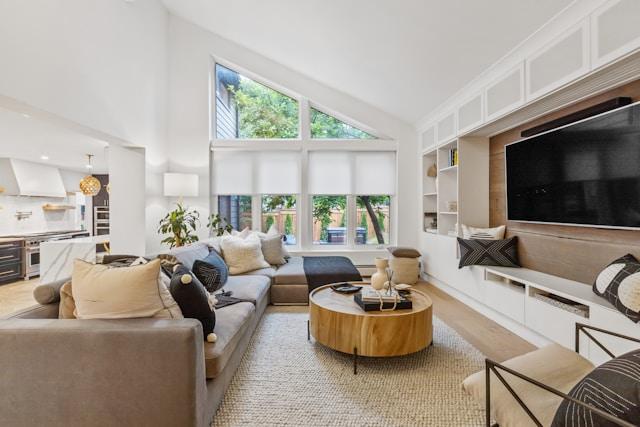
It is also worth noting that the affordability gap is reinforced by what private housing offers and how it is marketed. Condominiums and landed homes compete on facilities, exclusivity, brand positioning, and lifestyle. Buyers pay for pools, gyms, security, and the perception of status, alongside location premiums. These features are not frivolous, but they do contribute to a higher price level and attract buyers who can pay for those upgrades. HDB flats are designed to be functional homes within planned towns, supported by public infrastructure like transport, schools, clinics, hawker centres, and community amenities. That model channels value through public goods rather than bundling it all into the price of each unit. When value is delivered partly through shared infrastructure rather than privately priced features, the unit price does not need to carry the full weight of lifestyle differentiation.
Taken together, the factors that make HDB flats more affordable than private housing are not one-off discounts or temporary market quirks. They form a coherent framework: subsidised entry pricing, targeted grants, more predictable financing options, tighter borrowing constraints, and resale rules that discourage speculation and protect the intent of public support. Private housing, meanwhile, reflects the full expression of land scarcity, market demand, and investment appetite. The affordability difference is the outcome of two different philosophies. One treats housing primarily as a market asset whose price is a signal, the other treats housing as a national stability platform whose price is a policy outcome. In a land-scarce city, that difference in philosophy is powerful enough to shape what most households can realistically afford, and it is why public housing remains a central instrument in Singapore’s broader economic and social model.
 WhatsApp
 Instagram
 Threads